Skip to content

Posts by farmerknowsnothing

# Water, Drainage & Flooding: Is Your Farm Ready for Extreme Weather?

Water, drainage & flooding · 2 weeks ago

Water is one of the most valuable resources on any farm, yet managing it can be one of agriculture's biggest challenges. Too much rainfall can flood fields, damage crops, restrict livestock movement and delay essential machinery operations. Too little can reduce yields, limit grazing and create expensive irrigation problems.

Whether you're maintaining drainage ditches, repairing underground field drains, managing ponds or considering a borehole, understanding how water moves across your land can protect both your business and the surrounding environment.

One of the biggest mistakes farmers make is treating drainage and water supply as separate problems. Removing excess water during winter might solve an immediate issue, but failing to consider future water shortages could leave the farm vulnerable during summer.

Five things every farmer should prioritise:

- Ditches and field drainage: Regularly inspect existing drainage systems, identify blocked outlets and understand where water enters and leaves your land. Avoid unnecessary excavation and check whether maintenance requires environmental consent.

- Flood prevention and soil protection: Improve soil structure, manage compaction and identify fields vulnerable to flooding. Consider how cultivation, livestock movements and machinery use affect infiltration and surface runoff.

-Boreholes and water security: Understand your farm's water requirements before investing in a borehole. Investigate groundwater availability, installation costs, water quality and whether abstraction licensing is required.

- Ponds and water storage: Explore suitable opportunities to capture and store water while protecting existing habitats. Properly designed storage may support irrigation or livestock operations during periods of water scarcity.

- Emergency planning and maintenance: Prepare for extreme rainfall, drought, damaged drainage infrastructure and interruption to water supplies. Maintain accurate records and identify which buildings, fields and livestock facilities face the greatest risks.

The important question: Are you managing water for the weather your farm experienced in the past, or preparing for the conditions it might experience in the future?

Imagine operating a mixed farm with 150 acres of agricultural land.

During winter, several fields become waterlogged. Drainage ditches overflow, machinery access becomes restricted and livestock require alternative accommodation.

You consider investing £15,000 in drainage improvements.

However, the following summer brings prolonged dry conditions, and the same business struggles to provide sufficient water for crops and livestock.

Would you concentrate your investment on improving drainage, investigate water storage or develop a long-term strategy addressing both problems?

The right answer depends on the farm's soil, topography, rainfall, existing drainage infrastructure, available water resources and the financial consequences of each option.

Drainage: Is the problem underground or on the surface?

Waterlogging does not always mean that a field requires additional drainage pipes.

Poor soil structure, compaction, blocked outlets, damaged drains or inadequate watercourse capacity can all contribute to standing water.

Before investing in expensive drainage work, investigate where water accumulates, how quickly it drains and whether existing infrastructure is functioning correctly.

Soil inspections and professional drainage assessments can help distinguish between a drainage problem and a soil-management problem.

Installing new drainage without identifying the underlying cause could result in substantial expenditure without delivering the expected improvement.

Ditches and watercourses: Maintenance comes with responsibilities

Ditches and ordinary watercourses can play an important role in agricultural drainage.

However, responsibility for maintenance and the right to undertake work are not always straightforward.

Depending on the location and circumstances, landowners may have riparian responsibilities for watercourses running through or alongside their property.

Activities such as dredging, altering banks, installing culverts or changing water flow may require permission from the relevant authority.

Inappropriate work can increase flood risk elsewhere, damage wildlife habitats or create legal problems.

Farmers should establish their responsibilities and obtain any necessary consents before carrying out significant alterations.

Boreholes: Could your own water supply protect your farming business?

A borehole can potentially provide a valuable source of water for livestock, irrigation or other agricultural activities.

However, drilling a borehole does not guarantee an adequate or reliable water supply.

Groundwater availability, seasonal variation, pumping requirements, electricity costs and water quality all affect whether a borehole is economically worthwhile.

Farmers should also understand the applicable abstraction licensing rules and obtain appropriate professional advice before investing.

Where water is intended for human consumption or food-related operations, additional quality and regulatory requirements may apply.

The most important calculation is the full cost of delivering usable water, not simply the cost of drilling the borehole.

Flooding: Sometimes prevention means changing how land is managed

Flooding cannot always be prevented, particularly during extreme rainfall.

However, farmers may be able to reduce certain risks through better drainage maintenance, soil management, suitable water storage and careful positioning of vulnerable infrastructure.

Repeated machinery traffic on wet soil can cause compaction and restrict infiltration.

Poorly managed runoff can also contribute to soil erosion and nutrient loss.

Flood planning should consider livestock evacuation, feed storage, chemical storage, electrical equipment, access routes and business continuity.

A farm that has experienced flooding before should document which areas were affected and use that information when deciding where future investment is most valuable.

The bigger discussion: Should farms concentrate on drainage or water retention?

For generations, agricultural drainage has helped farmers turn difficult land into productive fields.

However, increasingly variable weather creates an important management question.

Should farms continue focusing primarily on removing excess water, or should more attention be given to capturing and retaining suitable water for later use?

The answer isn't necessarily one or the other.

Effective agricultural water management may involve maintaining productive drainage systems while investigating appropriate reservoirs, ponds, improved soil structure and other measures that strengthen resilience.

Not every farm has suitable conditions for water storage, and not every drainage problem can be solved through changes in cultivation.

The objective should be to understand the farm's specific water risks before committing to expensive infrastructure.

Up for a discussion:

1. What's the biggest water-management problem on your farm: flooding, waterlogging, blocked drainage, drought or unreliable water supplies?

2. Have you invested in new field drainage or repaired existing systems, and did the improvements justify the cost?

3. Do you maintain your own ditches and watercourses, or have you experienced difficulties understanding maintenance responsibilities and permissions?

4. Have you installed a borehole, constructed a pond or invested in water storage? What would you advise another farmer considering the same project?

5. Has changing weather affected your cropping, grazing or investment decisions over recent years?

One final question: If you had £20,000 available specifically for water management, would you spend it improving drainage, developing water storage, securing an independent water supply or investigating which option would deliver the greatest benefit?

I'd be particularly interested in hearing from farmers who have successfully restored old drainage systems, reduced recurring field flooding or developed affordable ways to improve water security.

Sharing actual installation costs, ongoing maintenance expenses and practical experiences could help other farmers avoid costly mistakes.

Successful water management isn't simply about getting water off the land as quickly as possible. It's about having the right amount of water, in the right place, at the right time, without transferring problems to neighbouring land or the wider environment.

Weeds, Pests & Disease: Are You Protecting Your Crops or Wasting Money?

Weeds, pests & disease · 2 weeks ago

Every farmer knows the frustration of watching months of hard work come under threat from weeds, pests or disease. Whether it's docks and thistles spreading across pasture, slugs damaging newly established crops or blight threatening an entire potato harvest, these problems can have serious consequences for productivity and profitability.

However, one of the biggest mistakes farmers make is treating a problem before fully understanding what caused it. Applying more chemicals, increasing spray frequency or repeatedly cultivating a field doesn't necessarily provide better protection.

Effective crop protection starts with early identification, preventative management and understanding when intervention is genuinely worthwhile.

Five things every farmer should prioritise:

- Weed identification and prevention: Identify troublesome weeds such as docks, thistles, blackgrass and other invasive species before selecting a control method. Poor grazing management, soil disturbance and inappropriate cultivation can encourage certain weeds to establish.

- Pest monitoring: Regularly inspect crops for slugs, aphids, flea beetles and other damaging pests. Use recognised monitoring methods and crop-specific action thresholds where available rather than treating every pest sighting as an emergency.

- Disease prevention: Understand the conditions that encourage diseases such as potato blight, cereal rusts and mildew. Resistant varieties, crop rotation, appropriate plant nutrition and timely monitoring can help reduce disease pressure.

- Integrated pest management: Combine preventative measures, biological control, cultivation techniques, crop rotation and carefully selected treatments when necessary. Avoid relying exclusively on chemical products.

- Responsible chemical use: Check that pesticides are authorised for the intended crop and purpose. Follow product labels, applicable legislation, environmental restrictions and safety requirements. Keep accurate application records and use appropriately qualified operators.

The important question: Are you controlling weeds, pests and diseases because monitoring shows intervention is necessary, or because spraying has become part of your annual routine?

Imagine managing 100 acres of mixed arable land and permanent pasture.

During spring, docks and thistles begin spreading across several grazing fields. Meanwhile, emerging crops suffer slug damage, and weather forecasts suggest conditions favourable for fungal diseases.

Treating every field immediately might appear to be the safest solution. However, widespread treatment can become expensive, create unnecessary environmental risks and increase selection pressure for resistance.

Would you treat everything, concentrate on the most vulnerable areas or investigate the underlying causes before deciding where intervention is justified?

A successful strategy involves understanding which problems threaten production, how quickly they may develop and which management options offer the most effective long-term control.

Weeds: Why killing them once doesn't necessarily solve the problem

Docks, thistles and other persistent weeds can compete with productive grasses and crops for space, nutrients, water and sunlight.

However, the presence of weeds may also highlight underlying management problems.

Overgrazing, poaching, bare soil, compaction and poor sward establishment can provide opportunities for unwanted plants to spread.

Repeatedly treating weeds without addressing these conditions may lead to recurring infestations and unnecessary expenditure.

Effective management might involve improving grassland productivity, adjusting grazing pressure, preventing seed production and using targeted control methods where appropriate.

For arable farmers, crop rotation, competitive crops, drilling dates and cultivation choices can form part of a broader weed-management strategy.

Slugs and other pests: Monitoring before spending

Slugs can cause considerable damage to emerging crops, particularly when conditions favour their activity.

However, pest pressure varies considerably between fields, seasons, crops and establishment methods.

Monitoring can help identify which fields are genuinely at risk and whether control measures are necessary.

Field history, soil conditions, crop residues, weather forecasts and establishment quality should all influence management decisions.

Pesticide applications should be justified by the actual risk and carried out using currently authorised products in accordance with their labels and relevant environmental requirements.

The objective should be to prevent economically significant damage without making unnecessary applications.

Crop diseases: Prevention can be more effective than emergency treatment

Diseases such as potato late blight, cereal rusts and powdery mildew can develop rapidly when susceptible crops experience favourable environmental conditions.

Effective management starts before symptoms become widespread.

Variety selection, rotation, crop monitoring, hygiene and appropriate nutrition can all help reduce disease risk.

Disease forecasting tools and qualified agronomic advice may also help farmers make better decisions about preventative measures and treatment timing.

However, no single strategy works for every disease.

Correct identification is essential because a treatment suitable for one disease may be ineffective against another.

Resistance: Are today's treatments creating tomorrow's problems?

Repeated reliance on the same pesticide mode of action can select for resistant weed, pest or pathogen populations.

Over time, products that previously provided effective control may become less reliable.

Resistance management should therefore be considered when planning crop rotations and treatment programmes.

Farmers should combine suitable non-chemical approaches with responsible pesticide use and follow current resistance-management guidance.

Protecting the effectiveness of available treatments is a long-term investment in the farming business.

The bigger discussion: Is preventative management cheaper than repeated treatment?

Imagine spending several thousand pounds annually treating recurring weed problems across the same fields.

The treatments provide temporary control, but the weeds return because the underlying soil conditions and management practices remain unchanged.

Would investing in drainage improvements, better establishment, adjusted grazing management or a different crop rotation offer a better long-term return?

Not every problem can be prevented, and chemical control remains an important tool in many agricultural systems.

However, the most profitable approach isn't necessarily the one involving the fewest treatments or the strongest products.

It's the approach that achieves reliable control at a justifiable cost while protecting crop health, people and the environment.

For discussion:

1. Which weed, pest or disease has caused the greatest financial damage on your farm?
2. Have you successfully controlled docks, thistles or another persistent weed without repeatedly relying on herbicides?
3. Which preventative measures have genuinely reduced slug damage or pest pressure in your crops?
4. Have you encountered resistance or noticed previously effective treatments becoming less reliable?
5. Do you use disease forecasting, regular crop walking or professional agronomic advice to decide when treatment is worthwhile?

One final question: If you could permanently solve one recurring weed, pest or disease problem on your farm, which would it be, and how much money or working time would it save?

I'd be particularly interested in hearing from farmers who have changed their approach after discovering that repeated treatment wasn't addressing the underlying problem.

Sharing practical experiences, successful preventative measures and genuine cost comparisons could help other farmers avoid unnecessary expenditure and protect their crops more effectively.

Successful crop protection isn't about eliminating every weed, insect or disease organism. It's about preventing unacceptable damage through informed decisions, responsible management and treatments that deliver genuine value.

Chickens & Ducks: Are You Protecting Your Flock and Making It Pay?

Chickens & ducks · 3 weeks ago

Keeping chickens and ducks can be one of the most rewarding parts of farming. Whether you have a handful of backyard birds, a smallholding flock or a commercial egg-producing enterprise, successful poultry keeping requires considerably more than providing a coop, food and somewhere to roam.

Healthy birds need suitable housing, balanced nutrition, clean drinking water, protection from predators and regular attention to parasites and disease.

One of the biggest mistakes new poultry keepers make is underestimating how quickly small problems can become serious. An unnoticed red mite infestation, poorly secured chicken coop or unsuitable feeding arrangement can affect an entire flock.

Five things every poultry keeper should prioritise:

- Housing and ventilation: Provide secure, dry, well-ventilated accommodation with appropriate nesting areas, perches for chickens and suitable resting space for ducks. Avoid overcrowding and regularly inspect buildings for damage.

- Egg production and moulting: Understand that egg production varies with breed, age, nutrition, daylight and seasonal moulting. A reduction in laying doesn't automatically mean that something is wrong.

- Red mite and parasite prevention: Regularly inspect housing, particularly cracks, perch ends and joints where red mites can hide. Establish an appropriate parasite-management programme and seek veterinary advice when necessary.

- Fox protection and security: Inspect fencing, strengthen vulnerable entry points, secure housing before dusk and consider predator-resistant mesh and appropriate ground protection.

- Feeding, hygiene and flock health: Provide species-appropriate feed, clean drinking water and suitable nutrition. Monitor birds daily for changes in appetite, movement, behaviour and appearance.

The important question: Is your poultry housing designed to keep birds comfortable during the day, or genuinely protect them when nobody is watching?

Imagine keeping 30 laying hens and several ducks on a smallholding.

Your birds are healthy, egg production is consistent and you occasionally sell surplus eggs to neighbours.

However, during the summer, egg production begins falling. Several hens become reluctant to enter their coop, and you notice tiny parasites hiding around the perch fittings.

At the same time, a fox has started appearing near your boundary fencing.

Would you immediately invest in a completely new poultry house, improve your existing security, investigate the parasite problem or reconsider the overall management of your flock?

The right approach involves understanding the cause of each problem rather than making expensive changes without evidence.

Chickens and ducks: Why one housing arrangement doesn't suit every bird

Chickens and ducks may share some management requirements, but their housing and feeding needs are not identical.

Chickens naturally seek elevated perches and enclosed nesting areas. Ducks generally require suitable floor-level accommodation and have different water-management requirements.

Ducks also produce considerable moisture around drinking facilities, which can create problems if their accommodation is poorly drained or ventilated.

Keeping both species together requires careful planning to ensure that each has access to appropriate feed, suitable resting areas and sufficient space.

Where separate housing is practical, it may simplify management and help address their different needs.

Red mite: The small parasite that can become an expensive problem

Red mites can hide in cracks, joints and other sheltered areas of poultry accommodation, emerging to feed on birds.

Heavy infestations can cause irritation, anaemia, reduced productivity and serious welfare problems.

Because these parasites can remain hidden during the day, farmers may overlook them until the infestation becomes substantial.

Regular inspection of housing, cleaning, maintenance and an appropriate treatment programme can help control the problem.

Treatments must be suitable for the birds concerned and used in accordance with current authorisations and veterinary advice, particularly where eggs or meat enter the food chain.

A clean-looking coop is not necessarily free from red mites.

Foxes and predators: Prevention is better than discovering a weakness

Foxes can exploit surprisingly small weaknesses in poultry housing.

A door left unsecured, damaged fencing or vulnerable ventilation opening may provide access.

Good poultry security should consider:

- Strong doors and reliable locking mechanisms.
- Suitable predator-resistant welded mesh.
- Secure ventilation openings.
- Protection against digging beneath fencing.
- Regular inspection of boundaries.
- Secure overnight accommodation.

Automatic poultry doors may provide additional convenience, but they should not replace regular checks. Farmers must ensure that every bird is safely inside before the building is secured.

Free-ranging birds remain exposed to additional risks, so outdoor access arrangements should reflect local conditions and current disease-prevention requirements.

Egg production: Understand the real cost of keeping laying birds

Producing eggs involves ongoing expenditure on feed, bedding, housing, parasite control, replacement birds and labour.

A flock that produces plenty of eggs may still be financially inefficient if substantial quantities are wasted, damaged or consumed by avoidable losses.

For anyone selling eggs, it is worth calculating the cost of producing each dozen rather than concentrating entirely on the number collected.

Commercial sales also bring food safety, traceability and potentially egg-marketing requirements, depending on how and where the eggs are sold.

Seasonal changes, ageing birds and moulting should be considered when forecasting egg production.

The bigger discussion: Is small-scale poultry keeping genuinely profitable?

Imagine expanding your flock from 20 to 100 laying hens.

Your egg production increases, and demand from local customers appears strong.

However, you now need additional housing, larger feed deliveries, more bedding, improved predator protection and considerably more time for cleaning and daily management.

Would the additional egg sales justify the investment?

Or would a smaller, well-managed flock produce a better return with fewer financial and operational risks?

The answer depends on accurate costings, reliable customers, flock health and the amount of labour involved.

Up For A Discussion:

1. Do you keep chickens, ducks or both, and what have you found to be the biggest difference in managing them?
2. What's the most effective and affordable poultry housing arrangement you've used?
3. Have you experienced red mite infestations, and which preventative measures helped reduce recurring problems?
4. How have you improved protection against foxes and other predators without restricting your birds unnecessarily?
5. Have you found selling surplus eggs financially worthwhile once feed, bedding and other costs are included?

*One final question: If you were starting again with £1,000, would you build a completely new predator-resistant poultry enclosure, invest in better housing or begin with a smaller flock and expand gradually?

I'd be particularly interested in hearing from poultry keepers who have built their own coops, developed practical predator-proofing solutions or successfully reduced feed waste.

Sharing genuine experiences, realistic expenditure and successful flock-management practices could help other farmers and smallholders avoid expensive mistakes.

Successful poultry keeping isn't measured solely by how many eggs your birds produce. It's measured by their welfare, the security of their environment and whether your management system remains practical and financially sustainable.

Farm Business Planning: Are You Making a Profit or Just Covering Costs?

Business planning & farm accounts · 3 weeks ago

Farming isn't simply about producing more crops, raising more livestock or expanding your acreage. It's about building a business that earns enough to cover its costs, reward your hard work and remain financially sustainable.

Whether you're managing a smallholding, operating an established family farm or starting your first agricultural enterprise, understanding your accounts is just as important as understanding your land and livestock.

One of the biggest financial mistakes farmers can make is confusing a healthy bank balance with a profitable business. Money coming into your account doesn't necessarily mean you're making a profit, especially when expensive machinery repairs, loan repayments, tax obligations and future production costs are still outstanding.

Five things every farming business should prioritise:

- Accurate costings: Understand what it costs to produce each tonne of grain, litre of milk, kilogram of beef or other product. Include relevant feed, seed, fertiliser, labour, machinery and overhead costs.

- Gross margins and profitability: Calculate income and variable costs for each farming enterprise, then account for fixed costs, depreciation and other expenses to understand overall business profitability.

- Cash-flow management: Forecast when money will enter and leave your business. A profitable farm can still encounter serious difficulties if bills become payable before customers, processors or merchants make their payments.

- Tax and financial planning: Understand your business structure, applicable tax obligations, VAT arrangements and available allowances. Seek advice from a qualified accountant with experience in agricultural businesses.

- Record-keeping and financial reviews: Maintain accurate records of income, expenditure, livestock, crops, machinery and financial commitments. Review performance regularly instead of waiting until the end of the financial year.

The important question: If your farm produces more every year but your personal income remains unchanged, is your business genuinely growing?

Imagine operating a mixed farm that generates £250,000 in annual sales.

Your business appears successful. However, after accounting for purchased inputs, machinery, wages, rent, finance costs and depreciation, the amount remaining is considerably smaller than expected.

Meanwhile, your tractor requires replacing, input prices increase and an unexpected period of poor weather reduces your next harvest.

Would you expand production to increase turnover, reduce operating costs, change your farming activities or reconsider where your existing capital is invested?

The correct decision depends on understanding your financial position rather than simply looking at total sales.

## Gross margins: Which farming activities are actually making money?

A gross margin measures the difference between an enterprise's output and its variable costs.

For example, consider a hypothetical wheat enterprise:

| Item | Amount |
|---|---:|
| Wheat sales | £1,800/ha |
| Seed | £110/ha |
| Fertiliser | £350/ha |
| Crop protection | £240/ha |
| Other variable costs | £100/ha |
| Total variable costs | £800/ha |
| **Gross margin** | **£1,000/ha** |

These figures are illustrative rather than current market prices.

The £1,000 gross margin is not the farmer's final profit. Machinery ownership, labour, rent, administration and other costs still need to be accounted for.

Comparing gross margins across different enterprises helps farmers understand how individual farming activities contribute to the business. However, decisions should also consider shared overheads, labour requirements, rotational benefits and the capital each enterprise requires.

Cash flow: The difference between profit and survival

A farm can report an accounting profit while struggling to pay its immediate bills.

This can happen when substantial expenditure occurs months before the business receives payment.

For example, an arable farmer may purchase fertiliser, seed and crop-protection products long before selling the harvested grain.

A livestock farmer may incur months of feeding and veterinary costs before animals are ready for market.

A cash-flow forecast helps identify these financial gaps before they develop into serious problems.

Farmers should monitor expected sales, supplier payments, wages, rent, loan repayments, tax liabilities and major investment commitments.

Maintaining an appropriate financial reserve may also help protect the business against unexpected machinery repairs, livestock disease, extreme weather or delayed payments.

Machinery: Is ownership costing more than you realise?

Tractors, combines, telehandlers and other agricultural machinery can represent substantial investments.

However, the purchase price is only part of the ownership cost.

Depreciation, financing, maintenance, insurance, fuel, repairs and storage should all be considered.

Before purchasing another machine, compare the full ownership cost against contracting, hiring or sharing equipment with another business.

For some farms, retaining older machinery may be financially sensible. For others, repeated breakdowns and lost working time could justify replacement.

The most important consideration is whether the equipment delivers sufficient value relative to its total cost.

Tax and record-keeping: Plan ahead rather than reacting afterwards

Agricultural businesses may face different tax and accounting obligations depending on their legal structure, activities, assets and location.

VAT, income tax, corporation tax, capital allowances and succession planning can all affect important financial decisions.

Farmers should avoid making expensive purchases solely because they believe those purchases will reduce their tax bill.

An allowable expense or tax relief does not automatically make an unnecessary investment profitable.

Accurate records, regular financial reviews and professional advice can help farmers understand their obligations and make informed decisions.

Tax legislation and reliefs can change, so financial plans should always be based on the rules applicable to the relevant tax year.

The bigger discussion: Are farmers working for their businesses, or are their businesses working for them?

Farmers often invest enormous amounts of time, money and physical effort into their operations.

But a business that requires increasingly long working hours without providing a reasonable financial return may not be sustainable indefinitely.

A larger farm isn't automatically a more profitable farm.

Likewise, expensive machinery, expanding livestock numbers and record-breaking crop yields don't necessarily translate into financial security.

Sometimes improving the profitability of an existing enterprise makes more sense than expanding it.

Up for a discussion:

1. Do you calculate the full cost of production for every farming enterprise, or mainly monitor income and expenditure across the whole farm?

2. What has made the greatest difference to your profitability: reducing input costs, increasing production, improving selling prices or changing your farming system?

3. Have you ever discovered that an enterprise you believed was profitable was actually losing money?

4. Do you prefer owning agricultural machinery or using contractors to reduce capital expenditure?

5. How far ahead do you forecast your farm's cash flow, and how do you prepare for unexpected financial difficulties?

One final question: If you could make only one financial change to your farming business this year, what would it be?

Would you reduce borrowing, improve record-keeping, invest in equipment, diversify your income or concentrate on making your existing enterprises more profitable?

I'd be particularly interested in hearing from farmers who have successfully improved their financial position without expanding their acreage or livestock numbers.

What changes actually worked, and which investments turned out to be mistakes?

Sharing genuine experiences, realistic costings and practical financial lessons could help other farmers avoid expensive decisions and build more resilient agricultural businesses.

A successful farming business shouldn't be measured solely by its turnover, acreage or livestock numbers. It should be measured by its ability to generate sustainable profits, reward the people running it and withstand difficult financial conditions.

Buying Farmland: Are You Investing Wisely or Taking on Hidden Costs?

Buying land & tenancies · 3 weeks ago

Buying or renting agricultural land can be one of the biggest financial decisions a farmer will ever make. Whether you're purchasing your first few acres, expanding an established farm or considering a Farm Business Tenancy, understanding exactly what you're agreeing to is essential.

Land might look like an excellent investment, but its true value depends on considerably more than acreage and location. Soil quality, drainage, access, planning restrictions, existing tenancies and ongoing maintenance responsibilities can all affect what the land is worth to your business.

One of the biggest mistakes farmers and new entrants can make is committing to land before understanding the legal obligations, hidden costs and restrictions attached to it.

Five things every farmer should consider before buying or renting land:

- Finding suitable farmland: Consider soil quality, drainage, water availability, field access, location and suitability for your intended farming activities. Cheaper land isn't necessarily better value if improving it requires substantial investment.

- Farm Business Tenancies: Understand the length of the agreement, rent reviews, maintenance responsibilities, permitted agricultural activities and conditions for ending the tenancy. Consider whether the agreement provides enough security to justify investing in the holding.

- Rights of way and access: Investigate public footpaths, bridleways, private access rights and restrictions that could affect machinery movements, livestock management or future development.

- Hidden costs and existing obligations: Check boundaries, fencing, drainage, buildings, utilities, environmental agreements, existing occupiers and potential liabilities before committing to a purchase.

- Professional advice and financial planning: Obtain appropriate advice from an experienced agricultural solicitor, qualified rural surveyor and accountant. Calculate the full cost of purchasing or renting the land rather than concentrating exclusively on the advertised price.

The important question: Is owning

Behind Every Farm Is a Farmer: Let's Talk About Mental Health

Farmer mental health & support · 3 weeks ago

Farming is more than a profession. For many, it's a way of life, a family tradition and something they've dedicated years to building. But behind the early mornings, long working days and responsibilities, there can be pressures that others rarely see.

Financial uncertainty, unpredictable weather, livestock losses, rising costs, isolation and the constant responsibility of keeping a farm running can take a considerable toll on mental health.

One of the biggest challenges in agriculture isn't always finding solutions to practical problems. Sometimes, it's finding someone who genuinely understands what you're going through.

This discussion is about reminding every farmer that their wellbeing matters just as much as their farm.**

Five things every farmer should remember

- Talking is important: You don't have to face every problem alone. Sharing your experiences with someone you trust can help, whether that's another farmer, a friend, a family member or a professional.

- Financial pressure isn't personal failure:** Farming involves risks that are often beyond an individual's control. Difficult financial circumstances don't determine your worth or ability as a farmer.

- Rest is a necessity, not a weakness: Long working hours and limited opportunities to take time away can contribute to exhaustion. Even small, regular breaks and asking for help with workloads can make a difference.

- Isolation deserves attention: Working alone for extended periods can be difficult. Agricultural communities, local groups and farming organisations can provide valuable opportunities for connection.

- Seeking professional support is worthwhile: Persistent stress, anxiety, depression or feelings of hopelessness deserve proper attention. Speaking with a GP or qualified mental health professional is a practical step towards getting support.

The question we rarely ask in farming

Farmers regularly discuss crop yields, livestock performance, machinery repairs and market prices.

But how often do we ask each other a much simpler question?

How are you actually doing?

Imagine spending months caring for livestock, managing difficult weather conditions and working to keep your business financially stable.

Then something unexpected happens. Machinery breaks down, a valuable animal dies, or an important payment arrives late.

Individually, these situations might appear manageable. Together, they can become overwhelming.

Farming doesn't always provide an opportunity to walk away from responsibilities when things become difficult. Animals still require feeding, crops still need attention and bills continue to arrive.

That's precisely why supporting one another matters.

Building a farming community where nobody feels judged

FarmerKnowsNothing.com should be somewhere farmers feel comfortable discussing

Pig Farming: Are You Rearing Healthy Pigs or Losing Profit Without Realising It?

Pigs · 3 weeks ago

Pig farming requires considerably more than providing feed, shelter and somewhere for pigs to roam. Whether you're managing a small outdoor herd, breeding pedigree pigs or operating a commercial pig enterprise, successful production depends on animal welfare, breeding performance, feeding efficiency, suitable housing and accurate record-keeping.

One of the biggest mistakes pig keepers can make is underestimating the cost of producing each pig. Feed, veterinary care, bedding, fencing, housing, labour, transport and regulatory requirements can quickly reduce profit margins.

A healthy-looking herd does not automatically mean a profitable business. Poor farrowing performance, high feed costs and preventable piglet losses can create financial problems that may not become obvious until the animals are sold.

Five things every pig keeper should prioritise:

- Breeding and farrowing: Maintain accurate breeding records, provide appropriate nutrition for pregnant sows and prepare clean, comfortable farrowing accommodation. Monitor farrowing carefully and have a veterinary-approved procedure for assisting sows and caring for newborn piglets.

- Housing, arks and outdoor management: Provide suitable shelter, dry bedding, adequate ventilation and protection from extreme weather. Outdoor pigs also require secure fencing, well-maintained arks and appropriate management of muddy or heavily used ground.

- Feeding and production costs: Match feed to each animal's age and production stage. Monitor feed consumption, growth rates, wastage and the cost of producing each kilogram of liveweight.

- Health and biosecurity: Maintain a herd-health plan with your veterinary surgeon. Control access to your pigs, manage new arrivals appropriately and maintain effective cleaning, disinfection and disease-prevention procedures.

- Identification, movements and paperwork: Understand the registration, identification, movement-reporting and record-keeping requirements applicable to your holding. Maintain accurate records of livestock movements, veterinary treatments, deaths and other legally required information.

The important question: Are you measuring the profitability of every pig you produce, or simply hoping the final selling price covers your costs?

Imagine running a small outdoor pig enterprise with several breeding sows. Your pigs appear healthy, your customers appreciate the quality of your pork, and demand for your produce is increasing.

However, feed prices rise, winter weather damages your paddocks, bedding costs increase and unexpected veterinary expenses affect several litters.

You eventually discover that, although you are selling more pigs than ever, your actual profit has fallen.

Would you increase production, invest in better housing, change your feeding arrangements or reassess whether your selling prices reflect the true cost of rearing your animals?

The answer depends on understanding where the money is being spent and whether your production system can deliver a sustainable return.

Farrowing: Where good management makes an enormous difference

Every piglet represents an investment in breeding, feed, housing and labour.

Poor farrowing preparation can increase the risk of piglet mortality, sow health problems and unnecessary veterinary expenditure.

Suitable farrowing accommodation should provide a safe environment for the sow and her piglets, with appropriate temperature management, clean bedding or flooring, and facilities that allow effective supervision.

Outdoor producers should regularly inspect farrowing arks to ensure they remain secure, dry, properly ventilated and suitable for prevailing weather conditions.

Farrowing records should include litter size, births, losses, treatments and weaning performance. Reviewing these figures can help identify recurring problems and guide improvements.

Feed efficiency: Where small costs become substantial expenses

Feed is commonly one of the largest costs in pig production.

However, purchasing cheaper feed does not automatically reduce the cost of producing pork.

A lower-priced ration that produces slower growth, poor feed conversion or nutritional deficiencies could ultimately cost more.

Farmers should monitor feed conversion, growth performance, feed wastage and the nutritional requirements of different production groups.

Breeding sows, lactating sows, newly weaned piglets and finishing pigs have different nutritional needs.

Clean drinking water must always be available in sufficient quantities.

The most useful calculation is not simply how much a tonne of feed costs, but how much feed and

Farming Regulations: Are Your Records Ready for an Inspection?

Regulations & compliance · 3 weeks ago

Farming involves much more than managing crops, livestock and machinery. Animal identification, livestock movements, record-keeping, inspections and environmental regulations are all important responsibilities that can have serious financial and legal consequences if overlooked.

One of the biggest mistakes farmers can make is assuming that because their animals are healthy and their land is properly managed, their business must automatically be compliant. Missing movement records, incorrect livestock identification or incomplete medicine records can create problems even on otherwise well-managed farms.

Five things every farmer should prioritise:

- Livestock identification and movements: Ensure animals are correctly identified, registered and accompanied by the appropriate documentation. Follow the reporting deadlines and movement restrictions applicable to your location and livestock.

- Accurate record-keeping: Maintain up-to-date records covering births, deaths, livestock movements, veterinary medicines, pesticide applications and other activities where required. Check that your records agree with official databases.

- Preparing for inspections: Regularly review livestock identification, animal welfare, medicine storage, environmental obligations and relevant farm documentation. Address potential problems before an inspection identifies them.

- Environmental compliance: Understand the rules affecting manure and slurry storage, fertiliser applications, water protection, waste disposal and any environmental agreements associated with your land.

- Keeping up with regulatory changes: Farming legislation and reporting systems can change. Check official guidance regularly rather than relying entirely on procedures that were correct several years ago.

An important example: In England and Wales, cattle movements generally need to be recorded in the holding register within 36 hours and reported to the British Cattle Movement Service within three days. Specific circumstances and exceptions can affect the requirements, so farmers should always check the rules applicable to their movements.

The important question: Is your farm genuinely compliant, or are you assuming everything is correct because you have never had a problem?**

Imagine receiving notification of an upcoming farm inspection. Your livestock are properly cared for, but when you begin reviewing the paperwork, you discover that several movement records are missing, an animal's identification details are incorrect and some veterinary medicine records are incomplete.

Would you know exactly what to do, which authority to contact and how to correct those problems?

The difficulty is that administrative mistakes can have consequences beyond paperwork. Depending on the circumstances, non-compliance can result in movement restrictions, enforcement action, financial penalties or problems with scheme payments.

Regular internal checks and accurate records are therefore essential to protecting your farming business.

Up for discussion:

1. What is the most complicated farming regulation you currently have to deal with?

2. Have you experienced a farm inspection, and what advice would you give another farmer preparing for their first one?

3. Do you manage livestock movements and farm records digitally, on paper or through a combination of both?

4. Have changing regulations or reporting requirements created additional costs or administrative difficulties for your farm?

5. What improvements would you like to see in farming regulations to make compliance simpler without compromising animal welfare, food safety or environmental protection?

One final question: Should government departments provide farmers with a single, straightforward digital system covering livestock movements, compliance records, inspection preparation and regulatory updates?

For smaller farms and new entrants especially, the challenge is often understanding which rules apply, rather than deliberately

Tractors: Buy New, Repair Old or Make What You Have Last?

Tractors · 3 weeks ago

A tractor is one of the most important investments on any farm, but owning the biggest, newest or most powerful machine doesn't necessarily make financial sense. From purchasing second-hand tractors to maintaining hydraulics, servicing engines and repairing PTO systems, every decision affects running costs, reliability and profitability.

One of the biggest challenges farmers face is deciding when an ageing tractor becomes too expensive to maintain. A machine that's fully paid for might seem cheaper than buying a replacement, but unexpected breakdowns during harvest, drilling or other time-sensitive operations can quickly change that calculation.

Five things every tractor owner should consider:

- Buying new or second-hand: Compare purchase prices, service history, running hours, depreciation and expected maintenance costs. A well-maintained older tractor may offer better value than a newer machine with expensive finance repayments.

- Servicing and maintenance:Regularly inspect engine oil, filters, coolant, tyres, brakes and hydraulic systems. Preventative maintenance can help avoid expensive breakdowns during critical farming operations.

- Hydraulics and PTO systems:** Understand your tractor's hydraulic capacity, lifting limits and PTO requirements before purchasing implements. Worn connections, damaged guards and neglected hydraulic components can create serious safety risks.

- Repairing older tractors: Consider parts availability, mechanical reliability and the cost of specialist repairs. Older machines can remain extremely useful, particularly when replacement parts are affordable and the farmer can carry out appropriate maintenance.

- Running costs and efficiency:** Keep records of fuel consumption, repairs, servicing and working hours. Compare these expenses against the cost of replacing, hiring or contracting machinery.

The important question: Is it more profitable to keep repairing an older tractor or invest in a newer machine?**

Imagine owning a 25-year-old tractor that's fully paid for. It completes most daily jobs without difficulty, but repair costs are increasing and replacement parts are becoming harder to find.

Would you spend £8,000 repairing it, purchase a second-hand replacement for £35,000 or finance a modern tractor costing considerably more?

The answer isn't necessarily determined by age. An older tractor that costs relatively little to maintain and performs reliably could remain a valuable asset. However, a breakdown during a narrow harvest or drilling window could cost far more than the repair itself.

That makes reliability, machinery utilisation, available cash and the consequences of downtime just as important as the purchase price.

For discussion:

1. What tractor do you currently use, how many hours has it completed, and how reliable has it been?
2. Would you rather purchase a modern tractor with advanced electronics or an older mechanical model that's easier to repair yourself?
3. What's the most expensive tractor repair you've experienced, and was it worth fixing?
4. Have hydraulic, PTO or electronic problems ever caused major delays on your farm?
5. Which tractor manufacturer or model has proven the most reliable based on your own experience?

One final question: If you had £40,000 available today, would you purchase another tractor, rebuild your existing machine or invest that money elsewhere in your farming business?

I'd be particularly interested in hearing from farmers who have kept older tractors working for several decades. What maintenance practices, repairs or modifications have genuinely extended their working lives?

Sharing real ownership costs and repair experiences could help other farmers avoid expensive mistakes when deciding whether to repair or replace their machinery.

Fruit & Vegetable Growing: Better Harvests, Lower Costs & More Profit

Veg & market garden · 3 weeks ago

Fruit & Vegetable Growing: Better Harvests, Lower Costs & More Profit

Growing fruit and vegetables successfully requires more than planting seeds and waiting for harvest. Whether you're growing food for your family, supplying local markets or developing a commercial enterprise, careful planning, healthy soil and understanding customer demand can make all the difference.

One of the biggest mistakes growers make is producing crops without considering harvest timing, production costs or who will buy them. An excellent harvest can quickly become a financial loss if produce cannot be stored, sold or used before it deteriorates.

Five things every grower should prioritise:

- Soil and growing beds: Maintain healthy soil, improve drainage, manage nutrients and plan suitable growing beds to encourage productive crops.

- Polytunnels and protected growing: Use tunnels, greenhouses or suitable coverings to extend growing seasons, protect vulnerable crops and improve production reliability.

- Planting and harvest timing: Plan successive sowings and crop rotations to maintain a consistent supply rather than producing everything at once.

- Pest and disease management: Monitor crops regularly, encourage beneficial insects and use appropriate preventative measures to reduce avoidable losses.

- Selling and profitability: Understand production costs, identify reliable customers and calculate whether market prices cover growing, harvesting, packaging, transport and labour.

The important question: Are you growing what your land can produce, or growing what your customers actually want to buy?

For commercial growers, the most profitable crop is not necessarily the one producing the highest yield. It is the crop that generates a sustainable return after accounting for every cost involved in bringing it to market.

Up for a discussion? What has made the biggest difference to your fruit or vegetable growing success: raised beds, polytunnels, improved planting schedules, better pest management or selling directly to customers?

And for experienced market gardeners, which crops have consistently delivered the best returns relative to the time, space and money invested?

Soil Health: Better Fertiliser Use, Stronger Crops & Lower Costs

Soil, fertiliser & cover crops · 3 weeks ago

Healthy soil is the foundation of a productive and profitable farm. Understanding soil testing, lime, nitrogen, phosphorus, potassium (NPK), organic manures and cover crops can help farmers improve yields while reducing unnecessary expenditure.

One of the biggest mistakes farmers can make is applying fertiliser without understanding what their soil actually needs. Spending more on nutrients does not automatically produce healthier crops or higher profits.

Five things every farmer should prioritise:

Soil testing: Regularly test soil pH and nutrient levels to identify deficiencies and avoid unnecessary fertiliser applications.

Lime and soil pH: Maintain suitable pH levels for your crops to improve nutrient availability and root development.

Fertiliser management: Match nitrogen, phosphorus and potassium applications to crop requirements, soil conditions and realistic yield expectations.

Manures and organic matter: Account for the nutrients supplied by organic manures and manage applications carefully to protect soil and water.

Cover crops: Choose suitable cover crops to help protect bare soil, capture nutrients, support soil structure and improve rotation diversity.

The important question: Are you feeding your crops according to what your soil actually needs, or spending money on fertiliser out of habit?

Up for a discussion? Which practice has made the greatest difference to your farm's soil health and profitability: soil testing, liming, reducing fertiliser costs, using organic manures or introducing cover crops?

Arable Farming: Better Crops, Healthier Soil & Higher Profits

Arable · 3 weeks ago

Successful arable farming is about more than achieving high yields. Growing cereals, oilseeds and pulses profitably requires careful crop rotation, healthy soils, sensible input costs and getting machinery timing right.

One of the biggest mistakes farmers make is chasing higher yields without calculating whether the additional expenditure is worthwhile. A smaller harvest with lower production costs can sometimes deliver greater profits.

Three things every arable farmer should prioritise:

Soil health: Protect soil structure, maintain fertility and avoid unnecessary compaction.

Crop rotation: Use a balanced rotation to manage weeds, pests, diseases and input costs.

Machinery and timing: Drill, spray and harvest when conditions are suitable rather than rushing operations.

The important question: Are you producing more tonnes, or making more profit from every hectare?

Up for a discussion? What has made the biggest difference to your arable farm's profitability: crop rotation, fertiliser savings, machinery efficiency or better grain prices?

Important

A disclaimer can help explain the intended use and limitations of your spreadsheet, but it cannot guarantee protection against legal claims or exclude liabilities that cannot lawfully be excluded. If you intend to distribute or sell the workbook, have a qualified solicitor review your disclaimer and any accompanying terms of use.

The Farmers’ Financial Tracker: Income, Expenditure, Costs & Profit

Farm software & record keeping · 3 weeks ago

If you also need something like this:

n arable spreadsheet every farmer should have

A useful workbook could contain:

Crop performance
- Field.
- Crop.
- Variety.
- Area.
- Yield.
- Quality.

Inputs
- Seed.
- Fertiliser.
- Chemicals.
- Contractors.
- Machinery.

Machinery
- Fuel.
- Hours.
- Repairs.
- Cost/ha.

Marketing
- Tonnes sold.
- Buyer.
- Price.
- Haulage.
- Premium.
- Deductions.

Financial performance
- Revenue/ha.
- Variable cost/ha.
- Gross margin/ha.
- Fixed costs/ha.
- Net margin/ha.
- Cost/t.

Rotation
- Previous crops.
- Planned crops.
- Weed problems.
- Disease history.

That turns farm records into a decision-making system.

Please contact because I will need a full document on exactly what you need.

Important: A disclaimer can help explain the intended use and limitations of your spreadsheet, but it cannot guarantee protection against legal claims or exclude liabilities that cannot lawfully be excluded. If you intend to distribute or sell the workbook, have a qualified solicitor review your disclaimer and any accompanying terms of use.

Renewable Energy on Farm: What Every Farmer Should Know Before Investing

Renewable energy on farm · 3 weeks ago

40. The most important renewable-energy calculation: Self-consumption

Imagine a farm solar array produces:

100,000 kWh per year.

Farm A

Uses 80,000 kWh directly.

Exports 20,000 kWh.

Farm B

Uses only 30,000 kWh directly.

Exports 70,000 kWh.

Both farms have exactly the same solar panels.

Yet their financial returns could be considerably different because Farm A avoids purchasing far more electricity.

That demonstrates why the farm's demand profile can be more important than simply installing the largest possible array.

41. Energy independence does not necessarily mean disconnecting from the grid

Some farmers use the phrase “energy independent” to mean producing as much energy annually as the farm consumes.

That is different from physically operating without a grid connection.

A farm might generate:

150,000 kWh annually

while consuming:

120,000 kWh annually

and still require grid electricity because generation and consumption happen at different times.

True off-grid operation requires sufficient generation, storage, backup capacity and system resilience to meet demand during prolonged low-generation periods.

For most existing grid-connected farms, reducing grid dependence may be more economically sensible than eliminating the connection entirely.

42. Emergency backup needs special design

A common misunderstanding is that:

“If I have solar panels and a battery, the farm will keep running during a power cut.”

Not necessarily.

Many standard grid-connected systems automatically disconnect during a network outage for safety reasons.

Backup capability requires equipment specifically designed to isolate safely from the grid and supply selected loads.

Critical farm loads should be identified.

These might include:

- Milking equipment.
- Milk refrigeration.
- Poultry ventilation.
- Water pumps.
- Feeding systems.
- Heating.
- Communications.
- Security.

Emergency power requirements should be designed separately from normal energy-saving calculations.

43. Renewable energy can become an entirely separate farm enterprise

At larger scale, energy production may no longer simply reduce the farm electricity bill.

It can become a diversification enterprise in its own right.

This may involve:

- Leasing land to developers.
- Grid-scale battery storage.
- Large solar installations.
- Wind development.
- Anaerobic digestion.
- EV charging.
- Commercial power sales.

At that stage farmers need more than an equipment installer.

Professional advice may include:

- Solicitor.
- Accountant.
- Tax adviser.
- Planning consultant.
- Grid consultant.
- Energy consultant.
- Land agent.
- Insurance adviser.

Large renewable projects can create substantial long-term value, but they can also affect land for decades.

44. Decommissioning should be planned on day one

Every renewable asset eventually reaches the end of its useful life.

Ask:

- Who removes the panels?
- Who removes foundations?
- Who removes underground cables?
- Who removes the battery?
- Who disposes of equipment?
- Can panels and batteries be recycled?
- Who pays?
- Must the land be restored?
- Is money reserved for decommissioning?

For leased land, these responsibilities should be clearly documented.

Do not leave the next generation of farmers with an expensive removal problem.

45. The bigger discussion: Should farms become energy producers as well as food producers?
This may become one of the most important agricultural debates of the coming decades.

Farmers already manage:

- Land.
- Water.
- Crops.
- Livestock.
- Buildings.
- Machinery.

Increasingly, they may also manage:

- Electricity generation.
- Battery storage.
- EV charging.
- Heat production.
- Grid services.

Renewable energy could give farms another source of income while making agricultural businesses less vulnerable to energy-price volatility.

But there is also a legitimate question about land use.

If good agricultural land can earn considerably more money producing electricity than producing food, what happens to farming?

There is no single answer.

Some renewable development competes directly with agricultural production.
Some uses farm roofs that would otherwise produce nothing.
Some allows continued grazing.
Some turns lower-quality land into an additional revenue source.
Some renewable systems primarily exist to supply the farming business itself.

The distinction matters.

A question for the farming community

For farmers who have already installed solar, wind, hydro, biomass or battery storage:

Did the installation actually achieve the savings promised when you bought it?

hich part surprised you most?

Was it:

- Grid connection?
- Planning?
- Maintenance?
- Battery performance?
- Export payments?
- Insurance?
- Finance?
- Actual generation?
- Installer support?

And perhaps most importantly:

If you were starting again tomorrow, would you install the same system, install something different, or invest in energy efficiency first?

Real farm figures are especially useful here.

A system producing impressive numbers on a sales brochure is one thing.

A system that has been operating through five British winters, machinery breakdowns, falling tariffs and real farm workloads is something entirely different.

Renewable energy should not be judged by the number of panels, turbine size or battery capacity installed. It should be judged by whether it makes the farming business more resilient, productive and financially sustainable.

Important
A disclaimer can help explain the intended use and limitations of your spreadsheet, but it cannot guarantee protection against legal claims or exclude liabilities that cannot lawfully be excluded. If you intend to distribute or sell the workbook, have a qualified solicitor review your disclaimer and any accompanying terms of use.

Renewable Energy on Farm: What Every Farmer Should Know Before Investing

Renewable energy on farm · 3 weeks ago

10. Battery fire safety must be taken seriously

Lithium-ion battery systems require proper design, installation and emergency planning.

Government guidance notes that lithium-ion storage presents a small but material fire risk and that this risk needs to be managed appropriately. GOV.UK

For planning applications involving lithium-ion battery storage of 1 MWh or more in England, government guidance encourages applicants to engage with the relevant fire and rescue service before submitting the application. GOV.UK

Farmers should consider:

- Battery location.
- Fire separation.
- Emergency access.
- Manufacturer requirements.
- Ventilation.
- Flood risk.
- Impact protection.
- Fire detection.
- Isolation arrangements.
- Insurer requirements.

A battery should never simply be placed wherever there happens to be spare space.

11. Wind power: Excellent on the right site, disappointing on the wrong one

Wind turbines can provide substantial renewable generation where wind resources are suitable.

Unlike solar, wind can generate at night and during winter.

This can potentially complement solar generation extremely well.

However, wind energy is highly site-dependent.

A turbine installed in a poor wind location may never achieve the output assumed in the sales quotation.

Important factors include:

- Average wind speed.
- Turbulence.
- Turbine height.
- Nearby trees.
- Buildings.
- Hills.
- Terrain.
- Grid availability.
- Planning constraints.
- Maintenance access.

The correct approach is to obtain reliable wind-resource information rather than relying solely on an installer saying:
“It is always windy around here.”

Local observation is useful, but investment decisions need better evidence.

12. Why turbine height matters

Wind closer to the ground experiences greater interference from buildings, vegetation and terrain.

Higher turbines may access stronger and more consistent airflow.

This is why a small turbine placed immediately behind a large farm building can perform poorly even though the surrounding area appears windy.

The location of the turbine can be as important as the turbine itself.

13. Wind maintenance can be underestimated

Solar panels contain no rotating blades.

Wind turbines do.

That means farmers should consider:

- Gearboxes.
- Bearings.
- Blades.
- Generators.
- Braking systems.
- Tower inspection.
- Electrical equipment.
- Specialist maintenance.
- Crane access.

Before purchasing a turbine, establish:

Who will maintain this machine in 10 or 15 years?

Also establish how quickly parts can be obtained if the manufacturer or installer disappears.

14. Small-scale hydro: Potentially one of the most dependable renewable resources

Farms with suitable rivers, streams, weirs or watercourses may have hydroelectric potential.

Hydropower can be particularly attractive because, where water flow is reliable, it may produce electricity continuously.

Solar may generate primarily during daylight.

Wind may vary hour by hour.

A suitable hydro resource may operate day and night.

But the site requirements are demanding.

Two fundamental characteristics determine hydro potential:
Head
The vertical fall in the water.

Flow
The quantity of water passing through the system.

A site with high flow but almost no drop may have limited potential.

A steep drop with insufficient flow may also produce little energy.

Both must be assessed.

15. Hydro requires environmental investigation

Using a watercourse is not simply an engineering question.

Projects may require consideration of:

- Water abstraction.
- Impoundment.
- Fish passage.
- Ecology.
- Flood risk.
- River flows.
- Protected habitats.
- Land ownership.
- Planning.
- Environment regulator permissions.

Farmers should establish the regulatory position before commissioning major civil engineering work.
Civil works such as channels, pipes, weirs and turbine houses may represent a significant part of project cost.

16. Biomass: Renewable energy based around heat

Biomass systems generally produce heat by burning fuels such as:

- Wood chips.
- Wood pellets.
- Logs.
- Other suitable biomass fuels.

They can be useful for farms with substantial heating requirements.

Possible applications include:

- Poultry buildings.
- Pig units.
- Workshops.
- Farmhouses.
- Offices.
- Hot water.
- Certain drying processes.

A biomass installation should be designed around genuine heat demand rather than around the idea of owning a renewable boiler.

17. Biomass fuel quality matters enormously

Two loads of woodchip can behave very differently.

Important characteristics include:

- Moisture content.
- Chip size.
- Contamination.
- Energy content.
- Storage conditions.

Wet fuel contains energy that must first be used evaporating water.

Poorly prepared fuel may also cause:

- Blockages.
- Incomplete combustion.
- Additional ash.
- Increased maintenance.
- Boiler shutdowns.

If a farm intends to produce its own wood fuel, harvesting, seasoning, drying, storage and handling must all be included in the economic calculation.

18. Do not base a new biomass investment on obsolete subsidy assumptions
This is particularly important.

The UK Non-Domestic Renewable Heat Incentive supported technologies including biomass, but the scheme is closed to new applicants. Existing accredited installations may continue to have obligations and payments under their existing arrangements. GOV.UK

Therefore, a salesperson presenting an old RHI-based return-on-investment calculation for a new project should immediately raise questions.

The current investment needs to stand on current energy savings, available incentives and realistic operating costs.

19. Solar thermal and heat pumps should not be forgotten

Renewable farm energy discussions often focus entirely on electricity.

But farms can also have substantial heat demand.

Solar thermal systems heat water rather than generating electricity.

Heat pumps move heat rather than creating it directly through combustion and can potentially be suitable for some farm buildings and processes.

Whether they are economically appropriate depends on:

- Required flow temperature.
- Building insulation.
- Heat demand.
- Electricity price.
- Existing heating system.
- Available heat source.
- Capital cost.

They should be assessed alongside biomass rather than automatically excluded from the discussion.

20. Anaerobic digestion deserves its own category

Although your forum description mentions biomass rather than biogas specifically, anaerobic digestion is highly relevant to farm renewable energy.

An anaerobic digester uses biological processes to break down organic material without oxygen.

Potential feedstocks can include:

- Slurry.
- Manure.
- Crop residues.
- Purpose-grown crops where appropriate.
- Food or organic wastes subject to regulation.

The resulting biogas can potentially be used for:

- Heat.
- Electricity.
- Combined heat and power.
- Biomethane production.

Digestate remains after digestion and can have agricultural nutrient value.

However, AD plants are complex businesses rather than simple pieces of farm machinery.

Feedstock supply, planning, environmental permitting, digestate handling, gas equipment and long-term maintenance must all be considered.

21. Renewable energy should not compete unnecessarily with food production

There is an important land-use question surrounding renewable energy.

Should highly productive agricultural land be removed from food production when roofs, yards, lower-grade land or dual-use systems could be available?

The answer differs between farms.

Government planning policy in England specifically recognises the importance of protecting high-quality agricultural land when
development proposals are assessed. GOV.UK

Solar development can sometimes coexist with agricultural activity.

Sheep grazing between solar arrays is one example.

There is also growing interest in agrivoltaics, where agricultural activity and electricity generation intentionally share land.

The correct design depends on the farming activity, machinery access, panel configuration and commercial arrangement.

22. Buying the system versus leasing the land or roof
Farmers may encounter several commercial models.

Farmer-owned
The farm purchases the renewable system.

Advantages can include:
- Ownership of the asset.
- Full benefit from electricity savings.
- Greater operational control.

Disadvantages include:
- Capital requirement.
- Financing risk.
- Maintenance responsibility.

Developer-owned
A third party installs and owns the equipment.

The farmer may receive:

- Roof rent.
- Land rent.
- Discounted electricity.
- A combination of payments.

The financial risk may be lower, but contractual commitments may last for decades.

Power Purchase Agreement

A developer installs or finances equipment and sells electricity to the farm under an agreed contract.

This may reduce initial capital requirements but requires careful review of:

- Electricity pricing.
- Inflation adjustments.
- Contract length.
- Minimum purchases.
- Maintenance.
- Termination rights.
- Property sale.
- Roof repairs.

Long contracts deserve professional legal review.

23. Never sign a 20- or 30-year renewable lease without understanding the end of it

Long-term renewable agreements may affect:
- Future farm sales.
- Mortgages.
- Land value.
- Tenancies.
- Succession.
- Development opportunities.
- Access rights.

Questions worth asking include:
- Who owns the panels?
- Who owns the cables?
- Who owns the battery?
- Who removes everything at the end?
- Who pays for removal?
- What happens if the operator becomes insolvent?
- Can the agreement be transferred?
- What happens if the farmer sells the land?
- Who repairs roof damage?
- Who is responsible for insurance?

The annual rent may look attractive.

24. Measure payback properly

Suppose a solar installation costs:

£120,000

and generates annual savings and income of:

£18,000

A simple payback calculation would be:

£120,000 ÷ £18,000 = 6.7 years

That looks attractive.

But it is incomplete.

A proper financial model should also consider:

- Finance costs.
- Maintenance.
- Insurance.
- Inverter replacement.
- Panel degradation.
- Export price changes.
- Electricity price changes.
- Tax treatment.
- Downtime.
- Grid charges.
- Monitoring fees.
- Opportunity cost of capital.

For larger projects, farmers should consider measures such as:

- Net present value.
- Internal rate of return.
- Discounted payback.
- Sensitivity analysis.

The contractual obligations can be more important.

25. Always run a bad-case scenario

Sales projections usually show expected performance.

Farmers should also calculate what happens if conditions are worse.

For example:
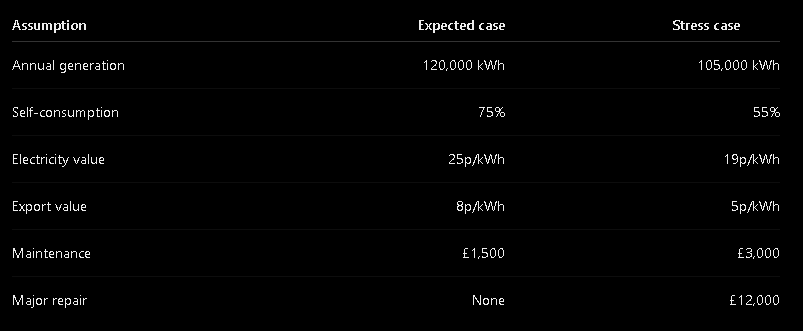
Image

These figures are illustrative only.

If a project remains financially acceptable under conservative assumptions, the investment case is considerably stronger.

26. Generation guarantees need careful reading

A quotation may include a prediction such as:

“Expected annual generation: 150,000 kWh.”

That does not necessarily mean the installer guarantees 150,000 kWh.

Read the contract carefully.

Ask whether the figure is:

- A modelled estimate.
- A performance warranty.
- An equipment warranty.
- An insured guarantee.

These are very different things.

27. Renewable equipment must be insured correctly

Do not assume farm insurance automatically covers a major renewable installation.

Tell the insurer before installation.

Important issues can include:

- Fire.
- Lightning.
- Storm damage.
- Theft.
- Business interruption.
- Machinery breakdown.
- Public liability.
- Battery systems.
- Roof loading.
- Loss of renewable income.

Insurers may have specific requirements regarding equipment location and installation standards.

28. Cybersecurity is becoming part of farm energy security

Modern renewable installations are increasingly connected to the internet.

Solar inverters, batteries, energy management systems and smart meters may all have remote-access capability.

That brings convenience, but also creates cybersecurity issues.

Farmers should ask:

- Who has remote access?
- Is two-factor authentication available?
- Are default passwords changed?
- Who supplies software updates?
- Where is the operational data stored?
- What happens if the cloud service closes?
- Can the system operate without internet access?

Farm cybersecurity is becoming increasingly important as more machinery and infrastructure become connected.

29. Combining solar, wind and batteries can be more powerful than using one technology alone

A farm may discover that no single renewable source perfectly matches its demand.

Solar can perform strongly during summer days.

Wind may produce more during different weather and seasonal conditions.

Hydro may provide relatively continuous generation where the resource exists.

A battery can move some of that energy from one time period to another.

The farm can therefore be designed as an energy system rather than as a collection of unrelated machines.

Example

Solar → Battery → Dairy parlour → Milk cooling

During the day solar charges the battery.

During an evening milking, stored electricity helps supply the parlour and refrigeration load.

The actual economic benefit depends on generation, demand patterns, tariffs and system losses, but matching technologies can substantially improve utilisation.

30. Sometimes energy efficiency beats renewable generation
Before spending £100,000 generating additional electricity, ask whether £20,000 could reduce consumption permanently.

Possible improvements include:

- LED lighting.
- Variable-speed drives.
- Better insulation.
- Efficient refrigeration.
- Heat recovery.
- High-efficiency motors.
- Better ventilation controls.
- Improved grain-drying management.
- Fixing compressed-air leaks.
- Smart controls.

The cheapest unit of energy is often the one the farm no longer needs to buy.
Energy efficiency can also allow the renewable installation to be smaller and cheaper.

31. The farm should have an energy hierarchy

A sensible order is:

1. Measure consumption
↓
2. Eliminate unnecessary energy use
↓
3. Improve efficiency
↓
4. Generate renewable energy
↓
5. Increase self-consumption
↓
6. Store surplus where financially sensible
↓

7. Export remaining electricity
That approach prevents expensive generation equipment from compensating for avoidable waste.

32. Farming electricity demand may rise considerably
Renewable investment should consider what the farm may look like in 10 or 20 years.

Future electricity demand could increase through:

- Electric tractors.
- Electric loaders.
- Electric vans.
- Heat pumps.
- Robotic milking.
- Automated feeding.
- Grain drying.
- Irrigation.
- Refrigeration.
- Farm diversification.
- Workshops.
- EV charging.

Government energy policy anticipates significant long-term growth in electricity demand as more sectors electrify. GOV.UK

A system designed solely around today's electricity bill may therefore underestimate future opportunities.

33. But do not wildly oversize a system because “electricity will probably be needed”

Future demand should be based on a real business plan.

If the farm might purchase electric machinery in eight years, that does not automatically justify buying a huge solar array today.

Technology prices, tariffs and equipment may change.

A modular system that can be expanded could sometimes be more sensible.

34. Renewable energy grants can change — never assume an old scheme still exists

Agricultural renewable-energy support has changed repeatedly.

A grant advertised several years ago may no longer exist.

Eligibility can also depend on:

- Country within the UK.
- Farm type.
- Business structure.
- Technology.
- Installation date.
- Project size.

Always verify current funding conditions directly with the relevant government body before using a grant in the project's financial case.

The same applies to subsidy schemes.

For example, both the domestic and non-domestic Renewable Heat Incentive schemes are closed to new applicants.
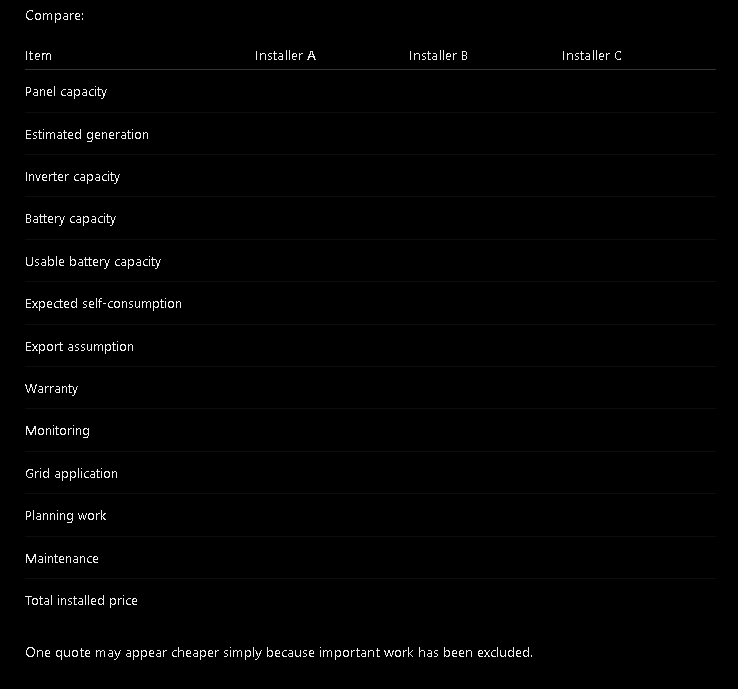
Image

36. Ask installers who actually carries the risk

Before choosing a contractor, establish:

- How long has the company traded?
- Who provides the equipment warranty?
- Who provides the workmanship warranty?
- What happens if the installer disappears?
- Who handles grid applications?
- Who handles planning?
- Who monitors performance?
- Who responds to faults?
- Where are replacement parts sourced?
- Is there a service agreement?

A 25-year panel warranty is not particularly useful if nobody is available to deal with a failure.

37. Keep renewable performance records

Once installed, monitor the system.

Record:

- Daily generation.
- Monthly generation.
- Imported electricity.
- Exported electricity.
- Self-consumed electricity.
- Battery charge/discharge.
- Faults.
- Maintenance.
- Downtime.
- Income.
- Savings.

A 200 kW system that quietly loses 15% of output through a fault could cost the farm substantial money before anyone notices.

Monitoring should therefore be considered part of maintenance.
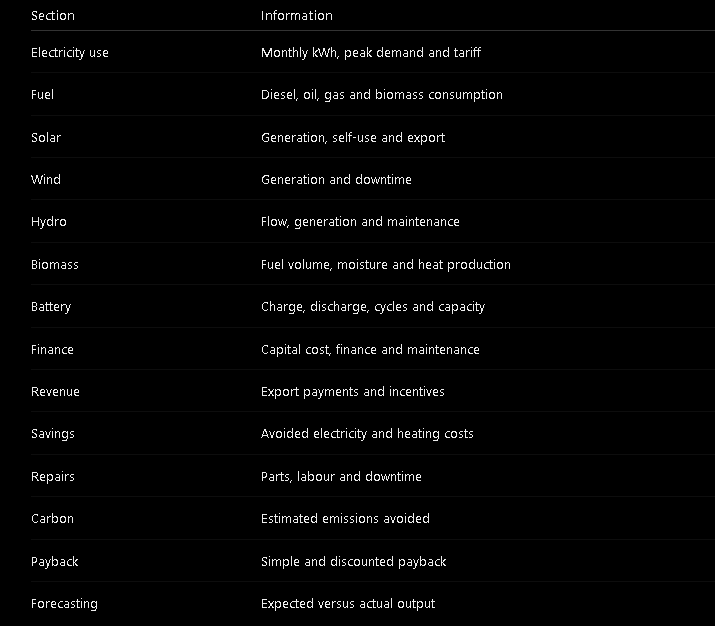
Image

The most powerful part is the expected versus actual column.

That quickly shows whether the project is performing as promised.

39. Questions to answer before spending £1

Before signing anything, answer these:

1. How much electricity and heat does the farm currently use?
2. At what time of day is it used?
3. How much could be eliminated through efficiency improvements?
4. Which renewable resource is strongest on this farm?
5. How much generation can realistically be consumed on site?
6. What export capacity is available?
7. Does planning permission apply?
8. What is the system's complete installed cost?
9. What maintenance is required?
10. What is the equipment lifespan?
11. What major component replacements are likely?
12. What happens when warranties expire?
13. What happens if electricity prices fall?
14. What happens if generation is lower than forecast?
15. What happens when the farm changes hands?
16. Who removes the equipment at the end of its life?

If these questions cannot be answered, the project is not ready.
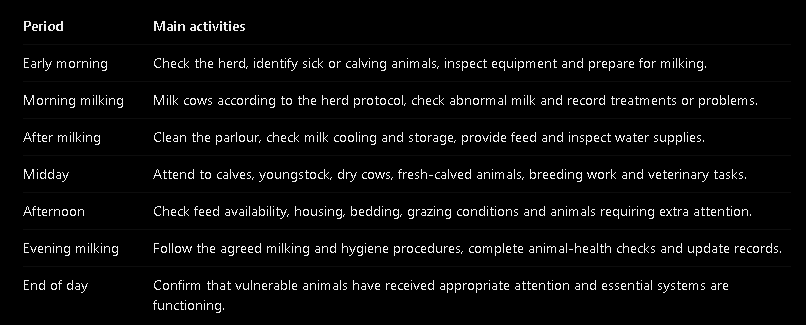
Renewable Energy on Farm: What Every Farmer Should Know Before Investing

Renewable energy on farm · 3 weeks ago

Solar, wind, hydro, biomass and batteries can reduce energy costs, create additional income and make a farm less exposed to volatile energy prices — but only when the system suits the farm, the grid connection works, planning is understood and the financial case survives realistic assumptions.

Renewable energy has become one of the biggest diversification opportunities available to farms.

A modern agricultural business may consume substantial amounts of electricity and heat through grain drying, milk cooling, ventilation, refrigeration, irrigation, workshops, lighting, pumps, poultry housing, livestock buildings and domestic accommodation.

That creates an obvious question:
Instead of buying all that energy, could the farm produce some of it itself?

For many farms, the answer is yes.

But renewable energy should not begin with choosing solar panels, a wind turbine or a battery.
It should begin with understanding when, where and how the farm uses energy.

A badly designed renewable project can tie up large amounts of capital while producing electricity when the farm does not need it. A well-designed system can reduce purchased electricity, protect the business against future price increases and, in some cases, create another income stream.

The most important principle is therefore simple:

Do not buy renewable technology first and work out how to use the energy afterwards. Measure the farm's energy demand first, then design the technology around it.

1. Start with your electricity bills, not a solar brochure

Before requesting quotations, collect at least 12 months of electricity and fuel information.

Ideally, examine several years.

Record:

- Annual electricity consumption.
- Monthly electricity consumption.
- Day and night usage.
- Half-hourly consumption where available.
- Maximum electrical demand.
- Electricity unit price.
- Standing charges.
- Heating oil, LPG, gas or biomass consumption.
- Diesel used for stationary processes.
- Major electrical equipment.
- Seasonal peaks.
- Planned expansion of the farm.

This matters because two farms using exactly 100,000 kWh per year may require completely different renewable systems.

A dairy farm may have relatively consistent daily electricity demand from milking, refrigeration and water heating.
A grain enterprise may use enormous amounts of energy during harvest and relatively little during the rest of the year.
A poultry farm may require continuous ventilation and heating.
A horticultural business may have substantial pumping, refrigeration or glasshouse demand.

Therefore, annual energy use alone is not enough.

The timing of consumption matters just as much as the total amount consumed.

2. Solar PV: Often the first renewable technology farmers consider

Solar photovoltaic panels convert daylight into electricity.

Agricultural buildings can offer excellent installation opportunities because barns, poultry sheds, stores, dairies and

workshops often have large roof areas.

Solar can potentially supply electricity for:

- Milk cooling.
- Refrigeration.
- Ventilation.
- Pumps.
- Workshops.
- Offices.
- Grain handling.
- Electric vehicle charging.
- Water heating through electrically powered systems.
- Battery charging.

The most valuable solar electricity is often the electricity you use yourself

Suppose the farm normally pays 25p per kWh for electricity.

If a solar array produces electricity that is immediately consumed on the farm, the business may avoid purchasing that unit at approximately the retail electricity price.

If the same electricity is exported, the farm may receive a different and potentially lower export payment depending on its tariff or agreement.

This means self-consumption can be extremely important to project economics.

A solar installer may proudly say:
“This system will generate 100,000 kWh per year.”

The better question is:

How much of those 100,000 kWh will my farm actually use when they are generated?
3. Roof-mounted solar or ground-mounted solar?

Roof-mounted solar
Agricultural buildings can make excellent locations because the panels use an existing structure rather than occupying additional land.

However, farmers should investigate the roof before installing anything.
Consider:

- Structural loading.
- Roof condition.
- Remaining roof life.
- Asbestos-containing materials.
- Orientation.
- Shading.
- Access for installation.
- Fire separation.
- Insurance requirements.
- Future building alterations.

Installing a solar array expected to operate for decades on a roof that will require replacement in five years could create unnecessary expense.

A structural assessment may therefore be one of the most valuable parts of the project.

Ground-mounted solar
Ground arrays can allow better orientation and easier maintenance.

However, they can affect agricultural land use and may face more complex planning considerations.

In England, government planning guidance places particular emphasis on considering agricultural land quality and protecting the best and most versatile agricultural land from significant inappropriate development. GOV.UK

The planning position depends on the location, scale and circumstances of the development, so the local planning authority should be consulted before committing to a project. GOV.UK specifically advises farmers to check whether permitted development rights apply and whether approval or full permission is required. GOV.UK

4. Do not assume planning permission is automatic

One of the biggest mistakes in farm renewable development is assuming:

“It is agricultural land, so I can build it.”

That is not necessarily correct.

Planning requirements can depend on:

- Technology.
- System size.
- Location.
- Building type.
- Listed-building status.
- Conservation areas.
- Landscape designation.
- Agricultural land classification.
- Height.
- Noise.
- Visual impact.
- Access.
- Ecological effects.

Some agricultural development can benefit from permitted development rights, but conditions and limitations apply. GOV.UK recommends checking with the relevant local planning authority before starting work. GOV.UK

Never place a large equipment order on the assumption that planning will be straightforward.

5. Grid connection: The part of the project many farmers discover too late

A renewable installation may produce electricity perfectly while still being unable to export everything it generates.

Why?

Because the local electricity network has limited capacity.

Before installing larger generation systems, farmers may need approval from the relevant Distribution Network Operator, commonly called the DNO.

Depending on the project, the network may require:

- Connection studies.
- Additional protection equipment.
- Export limitations.
- Network reinforcement.
- New transformers.
- Cable upgrades.
- Connection charges.

In some locations, export capacity can become the factor that determines whether a project is financially viable.

Example
Imagine a farm proposes a:
250 kW solar installation
but the network operator allows only:
100 kW maximum export.
That does not necessarily make the project impossible.

The farm might:

- Consume more electricity on site.
- Install export-limiting equipment.
- Add battery storage.
- Reduce system size.
- Change the project design.

But that should be known before substantial capital is committed.

Always investigate grid capacity early.

6. Solar does not mean electricity independence

Solar output varies throughout the day and year.

Generation is generally strongest around daylight hours and during sunnier months.

A farm requiring substantial electricity at 5am, 10pm or throughout winter cannot assume solar alone will cover those requirements.

This creates the fundamental renewable-energy problem:

Generation does not always happen when demand occurs.

That is where energy storage becomes important.

7. Farm battery storage

Battery systems store electricity for use later.

They can potentially store:
- Excess solar generation.
- Wind generation.
- Cheaper off-peak grid electricity.
and release it when electricity would otherwise be purchased at a higher price.

Government planning guidance recognises battery energy storage as an important part of integrating intermittent renewable generation and providing electricity-system flexibility. GOV.UK

Batteries can help farms:

- Increase solar self-consumption.
- Reduce peak electricity demand.
- Shift electricity use between tariff periods.
- Limit grid export.
- Provide some resilience where the installation is designed for backup operation.
- Participate in some energy-market services where commercially available.

But batteries require careful financial analysis.

8. Understand kW and kWh before buying a battery

These two numbers are frequently confused.

kW = power

This describes how quickly energy can be delivered.

kWh = energy capacity

This describes how much energy is stored.

Consider a:

100 kW / 200 kWh battery.

It could theoretically provide approximately:
- 100 kW for 2 hours,
- 50 kW for 4 hours,
subject to system limits, efficiency, state of charge and usable capacity.

A farm requiring 250 kW during a peak cannot assume that a 50 kW battery will remove that peak simply because the battery has a

large kWh capacity.

Both numbers matter.

9. Battery degradation is part of the cost
Batteries do not retain their original usable capacity forever.

Performance can decline with:

- Age.
- Number of cycles.
- Temperature.
- Depth of discharge.
- Operating conditions.

When comparing battery quotations, ask:

- What is the usable capacity?
- What is the warranted capacity after 10 years?
- How many cycles are covered?
- What operating conditions apply to the warranty?
- Is inverter replacement included?
- What happens if individual modules fail?
- Who monitors the battery?
- Who owns the software/data?
- Is remote access dependent on a subscription?

The cheapest battery quotation may not represent the lowest lifetime cost.

Dairy Cattle Farming: The Decisions That Determine Herd Health, Milk Quality and Long-Term Profitability

Dairy cattle · 3 weeks ago

Should every dairy farm invest in robotic milking?

Robotic milking is an attractive option for farmers who want to reconsider the traditional morning and evening milking routine.

However, robots do not eliminate the need for labour.

Cows still need monitoring, equipment requires cleaning and servicing, and staff must respond to faults and animal-health alerts.

Before investing, farmers should calculate the total ownership cost over the expected working life of the equipment.

That calculation should include installation, building alterations, finance, maintenance contracts, consumables, electricity, replacement parts and any changes to labour requirements.

The same principle applies to conventional parlour upgrades.

A successful parlour investment should improve the overall operation of the farm, not simply make the milking equipment more impressive.

6. Feeding dairy cows: Feed efficiency matters more than feed volume
Feed is one of the largest operating expenses in many dairy enterprises.

It is also one of the most important factors influencing milk production, fertility, body condition and animal health.

Dairy cows need sufficient energy, protein, effective fibre, minerals and vitamins appropriate to their stage of lactation, body condition and production requirements.

A ration that supports a freshly calved cow may be unsuitable for a dry cow.
Likewise, the nutritional requirements of a rapidly growing replacement heifer differ from those of a mature milking animal.

Why forage quality matters
AHDB's Forage First guidance encourages farmers to maximise the effective use of grazed grass and conserved forage, with purchased feed used to meet the remaining nutritional requirements. (AHDB)

The financial advantage of producing more milk from forage depends on forage quality, production costs, feed availability and the requirements of the herd.

Poor-quality silage can limit intake and performance, particularly in high-yielding cows.

Forage analysis helps a nutritionist formulate a ration based on what the cattle are actually eating rather than assumptions about the feed.

The importance of monitoring the ration
A ration that looks correct on paper may not perform as expected on the farm.

Farmers should monitor milk output, feed intake, body condition, dung consistency, health and fertility. AHDB identifies these as important ways to assess whether a dairy diet is delivering the intended results. (AHDB)

Feed refusals, sorting, restricted feed access and inconsistent mixing can all affect what individual animals consume.

Water access is equally important. Clean drinking water should be readily available, with enough trough space and flow capacity to meet demand.

7. Fertility: A cow that produces milk but cannot get back in calf creates a longer-term problem
Fertility is central to herd performance.

A cow that fails to conceive may remain in milk longer than intended, require additional breeding interventions or leave the herd prematurely.

Poor reproductive performance can also increase replacement costs and disrupt the planned calving pattern.

Why calving strategy matters
Dairy farms generally organise calving around their production system.

All-year-round calving spreads births and milk production throughout the year, while block calving concentrates births into a defined period.

Block calving can help seasonal systems match feed demand and milk production with grass availability, but it places particular importance on timely conception and a compact calving period.

AHDB publishes separate performance indicators for all-year-round and block-calving herds because the two systems have different management objectives. (AHDB)

A fertility review should consider heat detection, service records, pregnancy diagnosis, nutrition, calving difficulties and the incidence of reproductive disease.

Body-condition scoring is particularly useful around calving and early lactation.

Cows that lose excessive condition after calving may experience additional health and reproductive challenges.

Replacement heifers are a substantial investment
A replacement heifer consumes feed, requires housing and veterinary care, and occupies land before producing saleable milk.

Heifer-rearing costs should therefore be measured separately rather than hidden within the general herd expenditure.

Age at first calving, growth rates, health and survival all influence the cost of producing a replacement.

AHDB's all-year-round calving guidance identifies calving at approximately 24 months as a useful performance objective for appropriately managed heifers. (AHDB)

However, heifers must achieve suitable physical development and body condition. An arbitrary calving-age target should never take precedence over their welfare.

8. The transition period: A few weeks that can influence an entire lactation

The transition period covers the weeks around calving, when a cow moves from late pregnancy into milk production.
It is a time of substantial nutritional and physiological change.

Feed intake, energy requirements, calcium metabolism and immune function all need careful consideration.

Poor transition management can contribute to problems such as milk fever, ketosis, displaced abomasum, retained fetal membranes and other post-calving disorders.

These conditions can affect milk yield, fertility, treatment costs and the cow's ability to remain productive.

Transition management should cover appropriate dry-cow nutrition, suitable body condition, sufficient feed and water access, comfortable lying areas and close observation around calving.

Freshly calved cows should be monitored for appetite, demeanour, milk production and signs of illness.

Where problems recur, the farmer should review the transition programme with the veterinary surgeon and nutritionist rather than treating each case as an isolated incident.

9. Calf rearing: The future herd starts before the first milk cheque

Replacement heifers represent the future productive capacity of a dairy enterprise.

Poor calf management can affect survival, growth, health and subsequent performance.

The first priority after birth is ensuring that the calf receives sufficient high-quality colostrum promptly.

In England, the cattle welfare code sets out the legal requirement for calves to receive bovine colostrum as soon as possible and within their first six hours of life. It also sets out inspection, feeding, drinking-water and accommodation requirements for calves. (GOV.UK)

The farm should have a documented colostrum protocol developed with its veterinary surgeon.

Calf pens and feeding equipment must be kept clean, and animals should be monitored for diarrhoea, respiratory illness, dehydration and poor growth.

Calves that become ill need prompt assessment and appropriate treatment.

What happens to calves not retained for the dairy herd?

The management of dairy-bred calves is an important part of the enterprise.

Farmers should plan breeding and marketing arrangements for calves that will not be retained as replacements.
Options may include dairy-beef breeding, rearing calves for beef production or selling suitable calves into an established rearing system.

Those arrangements should be considered before breeding decisions are made.
Animal welfare, transport suitability, disease prevention, buyer requirements and the economics of rearing must all be taken into account.

10. Lameness and cow comfort: The hidden cost of poor housing and movement
Lameness can cause significant pain and affect a cow's ability to walk, feed, rest and reach the milking area.

It can also reduce production and increase treatment and replacement costs.

Prevention requires attention to hoof health, flooring, tracks, handling, housing and nutrition.

What should farmers examine?

The condition of the cow's environment is an important starting point.

Slippery or abrasive flooring, sharp turns, poorly maintained tracks and prolonged standing may all contribute to hoof problems.
Cubicles should allow animals to lie down and rise comfortably, with appropriate bedding and sufficient space.

Overcrowding can restrict access to feed, water and lying areas.

Routine mobility scoring helps identify changes in how cows walk. Animals showing abnormal movement need prompt assessment, with hoof treatment carried out by appropriately trained personnel and veterinary involvement where required.

The RSPCA identifies lameness as an important dairy-cow welfare concern across production systems. (RSPCA)

A profitable dairy system must allow cows adequate time to rest as well as sufficient opportunity to eat and drink.

11. Milk quality and the milk contract: Understand exactly what the buyer pays for

Dairy farmers do not all receive the same price for the same quantity of milk.

Payment may depend on milk composition, hygiene results, supply volumes, seasonal production, collection arrangements and the contract's pricing structure.

Butterfat and protein can change the value of a litre
Milk contains water, fat, protein, lactose and minerals.

Different processors value these components differently depending on the products they manufacture.

For example, a manufacturing contract may place substantial value on butterfat and protein, whereas another contract may use a different pricing structure.

AHDB's Milk Price Calculator allows farmers to compare contracts using common assumptions about milk composition, delivery volumes and quality measurements. (AHDB)

The useful comparison is the expected price for the milk your own herd produces, not simply the headline price advertised for a standard litre.

Milk hygiene and antibiotic residues
Milk quality management includes hygiene throughout milking, cooling, storage and collection.

Abnormal milk and milk subject to veterinary medicine withdrawal restrictions must be kept out of the saleable supply.
Clear cow identification, treatment records and an agreed procedure for handling withheld milk are essential.

A single mistake involving treated milk can have consequences extending beyond the individual cow, potentially affecting the bulk tank and the farm's commercial relationship with its buyer.

Understand the contract before signing
The UK's Fair Dealing Obligations (Milk) Regulations 2024 introduced requirements covering written milk purchase contracts and matters including pricing terms, contractual changes and dispute resolution. The requirements apply according to the scope and provisions of the regulations. (Legislation.gov.uk)

Farmers should understand the pricing formula, volume requirements, deductions, notice periods and the procedures available if a contractual disagreement arises.
Independent legal advice may be appropriate before entering into a substantial long-term supply agreement.

12. The daily routine: A reliable system is better than relying on memory

Dairy farming has a major operational challenge: essential work continues whether the usual farmer is available or not.

A good daily routine should therefore be clearly documented and understandable to competent relief staff.

An example of a general dairy routine is shown below. Actual timing and procedures depend on the herd, production system and welfare requirements.

Image

Automatic milking changes the scheduling of work but does not remove the need for monitoring, cleaning and responding to alarms.

What if the parlour breaks down?
Every dairy farm should have a practical emergency plan.

The plan should cover power failure, loss of cooling, water-supply interruption, milking-machine breakdown, staff shortages and other events that could prevent normal animal care or milk collection.

Emergency contact details, equipment instructions and arrangements for alternative technical support should be readily accessible.

13. Labour and safety: The farmer is part of the production system

Dairy farming can involve long hours, repetitive physical work and regular contact with large animals and machinery.

A business that depends entirely on one person's ability to work every day is vulnerable if that person becomes injured, ill or unavailable.
Proper training, reliable relief arrangements and safe working facilities are therefore business necessities.

The Health and Safety Executive identifies cattle handling as a significant agricultural hazard and recommends suitable handling facilities, competent workers and appropriate risk controls. (HSE)

Milking pits, electrical equipment, chemicals, slurry systems, tractors and livestock handling areas all require appropriate safety procedures.

Staff should understand how to report hazards, respond to emergencies and identify animals that need specialist attention.

It is also important to consider working hours and fatigue when planning staffing arrangements.

A dairy business should be designed so that its daily operation does not depend on one exhausted person being available indefinitely.

14. Record-keeping: Turn everyday observations into better decisions

Dairy farms can generate a considerable amount of information, but that information is only useful when it supports practical decisions.

A record-keeping system should connect animal performance with the costs and income of the enterprise.

Image

Farmers should be able to identify trends, not simply individual incidents.

For example, an increase in SCC alongside a rise in mastitis cases may indicate that infection control needs reviewing.

A reduction in milk yield accompanied by lower feed intake could suggest a feeding, health or environmental problem.

The important point is to investigate the cause rather than automatically assuming the solution is to increase concentrate feeding.

15. A practical annual review for every dairy enterprise

At least once a year, farmers should review both technical and financial performance with their relevant advisers.

The objective is to identify which changes will produce measurable improvements without compromising animal welfare.

[ ] Do we know our full cost of production per litre?
[ ] How much milk are we producing from forage?
[ ] What are our individual cow and bulk tank SCC trends?
[ ] How many clinical mastitis cases have occurred?
[ ] Are we monitoring fertility and replacement rates?
[ ] Are calves achieving suitable growth and health outcomes?
[ ] Do our cows have adequate lying, feeding and drinking space?
[ ] Are our milking equipment and cooling systems properly maintained?
[ ] Does our milk contract reward the milk composition and supply pattern we produce?
[ ] Are our staffing and emergency arrangements sufficient to maintain animal welfare?

The bigger discussion: Are dairy farmers being paid for the full cost of producing milk?

Dairy farming presents a difficult commercial reality.

Milk must be produced continuously, but the cost of producing it and the price received can change substantially over time.
Feed, electricity, fuel, fertiliser, labour and veterinary costs may rise while the milk price remains unchanged or falls.

The farmer cannot necessarily reduce production immediately without consequences for animal welfare, herd management and future productivity.

This means that dairy farmers face a business challenge that is not fully captured by the headline price per litre.

The September 2026 AHDB wholesale market report illustrates how different dairy products can move in different directions. The report records rising indicative prices for butter, skimmed milk powder and mild Cheddar during its reporting period, but also notes that these wholesale figures do not necessarily represent the prices achieved by individual milk processors. (AHDB)

These market movements do not automatically translate into an equivalent change in the price paid to every dairy farmer.
Milk contracts, processing arrangements and commercial commitments can all influence the relationship between wholesale markets and farmgate prices.

Farmers therefore need to understand not only their own cost of production but also how their milk is priced and what commercial risks their contract leaves them carrying.
The question every dairy farmer should be asking

If a farm improves milk yield but increases its feed bill, has it genuinely become more efficient?

If a new parlour reduces milking time but creates substantial finance and maintenance costs, how long will it take for that investment to pay for itself?

If a farmer receives a higher milk price but experiences more mastitis, higher replacement costs and poorer fertility, is the business actually moving forward?

These questions are worth asking because dairy profitability is not determined by one figure.
It comes from the combined performance of the herd, land, buildings, people, equipment and commercial arrangements.

A question for the farming community
For those currently running dairy herds, working in parlours or managing replacement youngstock, what has made the greatest difference to your operation?

Has it been improving forage quality, reducing mastitis, investing in a new parlour, adopting robotic milking, changing your breeding strategy or negotiating a different milk contract?

And for farmers who have experienced a difficult period of low milk prices, which changes helped protect your business without compromising the health and welfare of your cattle?

There is considerable value in farmers sharing practical experience, particularly when it includes real production costs, milk-quality results and the financial consequences of management decisions.

A dairy farm should not be judged solely by the number of litres it produces. Its long-term success depends on healthy cows, a capable workforce, productive land, reliable equipment and a business that earns enough to sustain them all.

Important
A disclaimer can help explain the intended use and limitations of your spreadsheet, but it cannot guarantee protection against legal claims or exclude liabilities that cannot lawfully be excluded. If you intend to distribute or sell the workbook, have a qualified solicitor review your disclaimer and any accompanying terms of use.

Dairy Cattle Farming: The Decisions That Determine Herd Health, Milk Quality and Long-Term Profitability

Dairy cattle · 3 weeks ago

Milking, yields, parlours, mastitis and the daily routine — what every dairy farmer should understand about running a productive, healthy and financially sustainable herd.

Dairy farming is one of the few agricultural enterprises where production, animal welfare and business performance must be managed every single day of the year.

A beef farmer may have some flexibility over when cattle are marketed, but a dairy farmer cannot simply postpone milking because milk prices have fallen, feed costs have increased or machinery has broken down.

Cows still need to be milked, calves must be fed, animals require attention and the milk collection schedule continues.

That constant responsibility makes dairy farming a particularly demanding business.

But the greatest mistake is to assume that the most successful dairy herd must be the herd producing the most milk.

A cow producing 12,000 litres a year is not necessarily more profitable than one producing 8,000 litres. The difference depends on feed costs, milk composition, fertility, veterinary expenditure, longevity, labour requirements and the milk contract.

The real measure of a successful dairy enterprise is not simply how much milk leaves the farm. It is how much sustainable income remains after producing that milk while maintaining the health and welfare of the herd.

This discussion focuses primarily on UK dairy farming, although the principles of herd management, milk quality, milking hygiene and cost control apply to dairy farmers worldwide.

1. The first rule of dairy farming: Know your true cost per litre
One of the most important figures in a dairy business is the cost of producing each litre of milk.

A farmer may know the current milk price to a fraction of a penny, yet still be uncertain about the full cost of producing that milk.

The difference between those two figures determines whether the enterprise is genuinely making money.

What does a litre of milk actually cost?
A proper cost-of-production calculation should include:

- Purchased feed, home-grown forage and grazing costs.
- Veterinary treatment, medicines, breeding and fertility management.
- Bedding, disinfectants, cleaning chemicals and parlour consumables.
- Electricity, water, milk cooling and refrigeration.
- Machinery, fuel, repairs, buildings and depreciation.
- Replacement heifers and youngstock rearing.
- Labour, including the farmer's own time.
- Land, rent, finance, insurance and administration.
- Milk collection charges, levies and other relevant deductions.

A farm that excludes the cost of its own labour, owned land or machinery depreciation can appear more profitable than it really is.

The calculation should also distinguish cash costs from full economic costs. Both matter: cash costs determine whether the business can meet its bills, while full economic costs help establish whether it is adequately rewarding the resources invested.

An example of why milk price alone can be misleading

Image

Farm B receives a lower price but generates a greater margin because its production costs are lower.

That does not mean every farmer should adopt a low-input system. Some higher-input farms achieve excellent financial performance because their additional investment produces sufficient extra income.

The point is to understand the relationship between expenditure, output and the actual return on that expenditure.
Producing more milk is only a financial improvement when the value of the additional milk exceeds the cost of producing it.

2. Milk yield: More litres are not always better
Milk yield is one of the easiest figures to measure on a dairy farm. It is also one of the easiest to misunderstand.

A cow producing 40 litres per day may appear more valuable than one producing 28 litres. However, that comparison is incomplete without considering milk components, feed intake, lactation stage, fertility, health and longevity.

A higher-yielding cow may require more energy-dense feed and more intensive management to maintain her condition and reproductive performance.

A lower-yielding cow in a well-managed grazing system may produce a smaller milk cheque but also incur substantially lower feed costs.

The appropriate system depends on the farm's land, buildings, climate, labour availability and milk contract.
Four figures worth measuring alongside yield

AHDB's dairy performance guidance identifies several technical and financial indicators that can help farmers understand the efficiency of their individual systems. (AHDB)

Image

Lifetime daily yield is especially interesting because it exposes a problem that annual production figures can conceal.

An animal producing a large quantity of milk for one lactation but leaving the herd prematurely may return less over her lifetime than a moderately yielding cow that remains productive for several lactations.

This is one reason fertility, lameness prevention and udder health should be considered alongside milk yield rather than treated as separate issues.

3. Milking routines: Consistency protects milk quality and cow health
Milking is not simply the process of attaching a cluster and collecting milk.

The way cows enter the parlour, how teats are prepared, the timing of cluster attachment and the condition of the milking equipment can affect milk quality, udder health and cow comfort.

A consistent routine helps minimise variation between milkers and provides a clear process for identifying problems.

What does good milking preparation involve?
AHDB recommends putting clusters on calm cows with clean, dry, well-stimulated teats. Its guidance recommends allowing pre-milking disinfectant at least 30 seconds of contact time, with an interval of approximately 60–120 seconds between initial teat stimulation and cluster attachment. (AHDB)

The appropriate procedure should follow the disinfectant manufacturer's instructions and the herd's agreed milking protocol.

Image

One important point is that a good routine must be practical enough to follow during every milking, including when relief staff are working or the farm is under pressure.

A complicated procedure that is regularly skipped offers less protection than a properly designed routine that is consistently followed.

4. Mastitis: One of the most expensive problems in a dairy herd

Mastitis is inflammation of the mammary gland, commonly associated with infection. It can cause pain, reduced milk production, abnormal milk and, in severe cases, serious systemic illness.
It is both an animal welfare problem and a financial problem.

AHDB estimates that a clinical mastitis case can cost approximately £250–£300 on average, although the cost varies with severity, treatment, lost milk and other circumstances. Its Mastitis Control Plan is designed to identify farm-specific causes and prioritise preventative action. (AHDB)

Understand the two broad sources of mastitis

Contagious mastitis
Infection may spread between cows, including during milking through contaminated equipment or contact. Good milking hygiene, infection monitoring and appropriate management of affected cows are important controls.

Environmental mastitis
Infection originates from organisms in the cow's surroundings, such as contaminated bedding, manure or wet and dirty lying areas. Clean, dry housing and hygienic teat preparation are important preventative measures.

This distinction matters because purchasing a new teat disinfectant will not necessarily solve a mastitis problem caused primarily by dirty, overcrowded cubicles.

Likewise, improving bedding may not resolve infections being transmitted through an inadequate milking routine.

The first step is to establish where and when new infections are occurring.
Somatic cell count: What does it actually tell you?
Somatic cell count, commonly abbreviated to SCC, is an important indicator of udder health.

A higher SCC can indicate inflammation or infection in the udder, although an individual result must be interpreted in the context of the cow and her health history.

A bulk tank SCC is useful for monitoring herd-level milk quality, but it cannot identify every infected cow.
Individual milk recording can help identify persistent high-cell-count animals, emerging infections and patterns associated with particular stages of lactation.

AHDB's mastitis guidance emphasises identifying infection sources and understanding whether problems are occurring during lactation or the dry period. (AHDB)

What should happen when mastitis is suspected?
Abnormal milk, a swollen or painful udder, reduced yield or a cow showing signs of illness requires prompt assessment.

The farm's veterinary mastitis protocol should determine sampling, treatment, monitoring and escalation.

Severe cases, especially when a cow is systemically unwell, require urgent veterinary attention.

Antibiotic treatment should be guided by the veterinary diagnosis, the likely pathogen and appropriate medicine-use requirements. Not every case requires the same treatment.

Milk from treated cows must be identified and excluded from the saleable supply for the applicable withdrawal period.

The most effective mastitis strategy is not simply treating more cases. It is understanding why new infections occur and preventing them wherever possible.

5. Milking parlours: The most expensive equipment is not always the most suitable
A milking parlour is one of the most important investments a dairy farmer can make.

It influences labour requirements, cow movement, milking time, udder health, electricity consumption and the farm's ability to expand.

But buying a larger parlour or installing robots does not automatically improve profitability.

The correct investment depends on herd size, available labour, existing buildings, cow traffic, financing and the farm's long-term business plan.

Understanding the main milking systems

Herringbone parlour
Cows stand at an angle to the operator pit. This is a familiar arrangement on many dairy farms and can suit different herd sizes. Performance depends on the number of milking points, cow flow and equipment.

Parallel parlour
Cows stand side by side, generally at right angles to the operator pit. It can provide efficient use of space and allow groups to exit together, depending on the installation.

Rotary parlour
Cows enter individual stalls on a slowly rotating platform. Rotary systems can accommodate substantial milking throughput, although capital costs, maintenance and operational requirements must be carefully assessed.

Robotic milking
Automatic milking systems allow cows to be milked without an operator attaching every cluster manually. They can change how labour is organised, but require management of cow traffic, machine capacity, cleaning, alarms and animals that do not attend voluntarily.

Beef Cattle Farming: The Decisions That Make or Break a Suckler Herd

Beef cattle · 3 weeks ago

Understand the classification grid
In Great Britain, carcases can be classified by conformation and fat cover under the recognised beef classification system.

Conformation describes carcase shape and muscular development, while fat class describes the level of fat cover.
AHDB publishes information on cattle carcase classifications, regional weight distributions and weight bands. (AHDB)

A particular buyer's payment schedule may reward some grades and penalise others.

Before selling, establish the required weight range, acceptable conformation and fat classes, age or breed requirements, assurance requirements and any applicable deductions.

The questions farmers should ask buyers

A transparent selling arrangement should allow the farmer to understand:

- What is the base price, and exactly which animals qualify?
- What deductions apply for weight, fat class, conformation or specification?
- How are transport, commission and other charges handled?
- When will payment be received?
- Can the farmer access the individual carcase results and payment breakdown?

A farmer who receives carcase feedback can use it to improve future breeding, feeding and marketing decisions.

The price comparison that matters
Compare the expected net return from each available route to market after accounting for grading, deductions, transport,

commission, extra feeding and the time before payment.

The highest quoted price is not necessarily the highest net return.

8. Buying store cattle: The profit is often determined before they arrive
Buying cattle to finish is not simply a matter of finding animals that look good in the sale ring.

The purchase price determines how much financial room remains for feeding, veterinary care, housing and other costs.

A store animal bought too expensively can be difficult to finish profitably even when it performs well.
Before buying, estimate the likely finished value using a realistic target weight, carcase yield, grade and sale price.

Then deduct the expected cost of feed, bedding, labour, veterinary care, finance, transport, marketing and any other relevant expenses.

The amount remaining determines what the enterprise can afford to pay for the animal while achieving its required margin.

Buying decisions should also account for disease risk, animal health history, movement requirements and the suitability of the animal for the farm's feeding system.

A cheap animal with an expensive health problem may ultimately be a costly purchase.

9. Animal health and biosecurity: Prevention belongs in the business plan
Disease can affect an enterprise long before a farmer notices a reduction in sale income.

Poor health can reduce fertility and liveweight gain, increase treatment costs, cause mortality and interrupt the planned sale of cattle.

A written herd-health plan agreed with the farm's veterinary surgeon should address the main risks relevant to the holding.

These may include bovine viral diarrhoea (BVD), infectious bovine rhinotracheitis (IBR), Johne's disease, leptospirosis, respiratory disease, parasites, lameness and calf scour.

The appropriate approach depends on disease status, vaccination history, local conditions and veterinary assessment.

Bovine TB and cattle movements
Bovine tuberculosis can have serious consequences for an affected business, including testing, movement restrictions and loss of animals.

In England, APHA guidance explains that cattle moving onto or off a TB-restricted holding generally require the relevant movement licence unless an applicable exception or existing authorisation covers the movement. (GOV.UK)

Testing requirements and exemptions can differ according to location, herd status, the type of movement and the applicable rules in England, Scotland or Wales. (GOV.UK)

Farmers should check the current requirements for their own holding before moving cattle.
Responsible use of veterinary medicines

Farmers must observe the relevant legal requirements for medicine administration, record-keeping and withdrawal periods.
An animal should not enter the food chain before the applicable meat withdrawal period has been completed.

Treatment records also provide valuable information about recurring disease, individual animal performance and overall veterinary spending.

Biosecurity is more than cleaning buildings. It includes managing animal introductions, visitors, equipment, isolation
facilities and contact between different groups of cattle.

10. Welfare, handling and farm safety should never be treated as optional costs

Good stockmanship protects animals and the people working with them.

Cattle handling is a serious safety issue, particularly around bulls, recently calved cows and animals under stress.

Suitable pens, secure gates, a properly maintained race and an appropriate cattle crush can make routine management safer and less stressful.

Farmers should have suitable facilities for veterinary examinations, pregnancy diagnosis, treatment, weighing and loading.

A familiar animal can still behave unpredictably, and no farmer should rely on temperament alone when deciding whether a handling task is safe.
Welfare planning must also cover feeding, water, shelter, lameness, bedding, ventilation and prompt attention to illness.

These requirements should be built into the farm's normal operating costs rather than treated as expenses that can be avoided when margins tighten.

11. Environmental management can influence future profitability
Environmental performance and financial performance are not completely separate issues.

A system that wastes purchased feed, allows nutrients to escape into watercourses or damages the soil may incur both financial and environmental costs.

Soil and nutrient management
Manure and slurry have nutrient value, but only when they are stored and applied appropriately.

Soil testing and nutrient planning can help identify where nutrients are needed and where additional applications may be unnecessary.

Application timing, ground conditions, storage capacity and proximity to watercourses must be considered alongside the

applicable environmental rules.

Protecting soil structure is particularly important in permanent grassland. Compaction can restrict drainage, root development and future grass production.

Methane and herd efficiency
Cattle produce methane during digestion, and manure management can also contribute to agricultural emissions.

Improving reproductive performance and reducing avoidable losses can reduce the resources required for each kilogram of beef produced.

However, environmental results should be assessed across the whole production system. Increasing growth rates through additional feed, for example, may change emissions and resource use elsewhere in the supply chain.

Farmers considering carbon assessments should understand what is included in the calculation, what is excluded and whether comparisons use the same methodology.

12. Record-keeping: The information a farmer should have before making major decisions
Farm records should help the farmer make decisions, not simply satisfy paperwork requirements.

The most useful records connect animal performance with costs and sale returns.

A practical beef enterprise spreadsheet could include the following information:

Image

One particularly useful figure is the full cost of production per kilogram of liveweight or deadweight sold, calculated consistently for the relevant enterprise.

Without records, it is difficult to distinguish an unusually expensive winter from a longer-term inefficiency.

It is equally difficult to know whether changing breed, feed supplier, grazing system or marketing arrangements has actually improved profitability.

13. A practical annual review for every beef enterprise
At the end of each production year, every farmer should be able to answer a few fundamental questions.

[ ] How many calves did we wean for every 100 cows and heifers put to the bull?
[ ] What was the total cost of maintaining our breeding herd?
[ ] How much did each kilogram of calf liveweight cost to produce?
[ ] Which cattle achieved the required growth rate, and which did not?
[ ] How much purchased feed did we use, and what did it cost?
[ ] Did our grazing system produce enough forage without damaging the land?
[ ] How many cattle fell outside the buyer’s preferred specification?
[ ] What did we receive after all sale deductions and marketing costs?
[ ] Did the enterprise generate enough to reward our labour and invested capital?
[ ] Which single change offers the clearest opportunity to improve next year’s result?

Farmers do not need to introduce ten major changes at once. One well-measured improvement in fertility, forage utilisation, animal health or marketing may be more useful than several changes whose individual effects cannot be identified.

The bigger discussion: Are beef farmers being rewarded for what they actually produce?

There is a wider question behind every calculation in a beef enterprise.

Farmers are expected to produce healthy animals, maintain welfare standards, manage land responsibly, comply with legislation and deliver cattle that meet increasingly specific market requirements.

Those responsibilities carry costs, and the farmer must meet many of them long before receiving payment for the finished animal.
Meanwhile, the price received for cattle can change during the production cycle.

This creates a genuine business challenge: the farmer commits capital to an animal without knowing the precise return that animal will eventually generate.

Forward supply arrangements, transparent pricing schedules, producer cooperation and better access to market information may help some enterprises manage that uncertainty. However, their value depends on the actual contract terms, available buyers and the individual farm's circumstances.

AHDB's production benchmarks demonstrate the importance of examining the whole enterprise rather than judging performance by output alone. In its 2024/25 suckler herd data, overheads differed substantially between the benchmark groups. (AHDB)

That raises an important question for farmers, processors, retailers and consumers alike: how can a supply chain maintain consistent production standards while allowing each participant to earn a sustainable return?

The answer is unlikely to come from increasing production alone. It requires better information about costs, more transparent commercial arrangements and production systems that are financially and practically sustainable.

A question for the farming community
For those running suckler herds, buying store cattle or finishing beef, which part of your enterprise has the greatest effect on your bottom line?

Is it fertility and calving performance, the cost of winter feeding, grassland productivity, the price of store cattle,

veterinary costs or the price you receive at slaughter?

And when you look back over your own records, which management decision has made the greatest measurable difference to your profitability?

There is considerable value in farmers sharing real figures and practical experience, particularly when those figures include the costs behind the selling price.

The future of a beef enterprise should not be measured solely by how many cattle leave the farm. It should also be measured by the health of the animals, the condition of the land and whether the business can afford to keep producing them.

Important
A disclaimer can help explain the intended use and limitations of your spreadsheet, but it cannot guarantee protection against legal claims or exclude liabilities that cannot lawfully be excluded. If you intend to distribute or sell the workbook, have a qualified solicitor review your disclaimer and any accompanying terms of use.

Beef Cattle Farming: The Decisions That Make or Break a Suckler Herd

Beef cattle · 3 weeks ago

Suckler herds, finishing, grazing systems and getting a fair price — what every beef farmer should understand before the next breeding season, winter housing period or cattle sale.

Beef farming is often judged by the cattle standing in the field. A strong bull, healthy calves and well-finished animals are visible signs of good stockmanship. But the real performance of a beef enterprise is found in the less obvious details: the number of calves weaned per cow exposed to the bull, the cost of keeping that cow for a year, the quality of the grass she eats, the feed required to finish her offspring and the money left after every bill has been paid.

A farm can produce excellent cattle and still struggle financially. Equally, a smaller herd with good fertility, productive grassland, controlled costs and a reliable market can achieve a better financial result than a much larger operation.

The important question is not simply how much your cattle are worth when you sell them. It is how much it cost you to produce each kilogram of beef and whether the selling price rewards that investment.
This discussion focuses primarily on UK beef farming, although many of the principles apply to cattle producers elsewhere.

1. The first rule of beef farming: Know what one calf actually costs you
One of the most important figures in a suckler enterprise is the cost of producing a weaned calf.

Many farmers can tell you what their cattle made at market, but fewer can immediately tell you the complete cost of getting those animals there.

Consider everything involved in keeping a breeding cow:

- Winter forage, concentrates, minerals and bedding.
- Grazing, fertiliser, reseeding and grassland maintenance.
- Veterinary treatment, vaccinations and breeding costs.
- Bull purchase, upkeep and eventual replacement.
- Machinery, diesel, electricity, buildings and repairs.
- Land rent, finance, insurance and administration.
- Replacement heifers and the cost of maintaining unproductive animals.
- The farmer's own labour and the economic cost of using owned land.

The final two are particularly important. A business can appear profitable on paper while relying on the farmer working without a proper wage.

AHDB's 2024/25 suckler herd benchmarking illustrates just how dramatically production costs can differ between farms.

Image

The lesson is that controlling costs can be just as important as achieving a higher selling price.

A farmer who increases the value of each calf by £100 but spends an additional £150 producing it has not improved the business.

A profitable animal is not necessarily the heaviest animal. It is an animal that produces a worthwhile margin after its entire cost of production has been accounted for.

2. Suckler herds: Fertility is the foundation of the business
A suckler cow has one primary productive responsibility: rear a healthy calf.

A cow that fails to conceive still consumes forage, occupies land, requires veterinary care and contributes to the farm's overheads.

This is why reproductive performance deserves the same attention as the market price of finished cattle.

What should a suckler farmer measure?
AHDB identifies several key performance indicators for breeding herds. Its published benchmarks include the following ranges for well-performing enterprises.

Image

The benchmark ranges are reference points, not targets that should be pursued regardless of animal welfare, breed, land quality or the economics of an individual enterprise.

The calf-weaning figure can exceed 100 because of twins.

Why a compact calving season matters
A compact calving period allows farmers to manage cows with similar nutritional requirements, simplify veterinary work and produce more uniform groups of calves.

For spring-calving systems, it can also help align peak feed demand with spring grass growth.

A spread-out calving season may result in calves of significantly different ages and weights being sold together. That can complicate marketing and finishing decisions.

However, tightening a calving period must be planned carefully. Reducing bulling duration too abruptly without investigating underlying fertility problems could increase the number of empty cows.

Pregnancy diagnosis, bull fertility examinations, body-condition scoring and veterinary advice can help identify problems before the next breeding season.

Choosing the right breeding cow
The largest cow is not automatically the most productive cow.

A larger animal often needs more feed for maintenance. Whether she earns that additional feed depends on fertility, calf growth, longevity and the value of her offspring.

A practical breeding policy should consider maternal ability, temperament, calving ease, fertility, sound feet, suitability for local grazing and the market required for the calves.

Terminal traits matter when producing calves for beef, but they should not automatically take priority over maternal traits in a herd that retains its own replacement heifers.

A breeding cow should be judged on what she produces over her lifetime relative to what she costs to maintain.

3. Calving and calf survival: Protect the investment already made

By the time a cow calves, the business has already invested months of feed, land, labour and veterinary care.
Losing a calf at birth is therefore not simply the loss of an animal. It also reduces the economic return from the cow's entire breeding year.

Calving management should begin well before the expected due date.

Cows and heifers need appropriate body condition, balanced nutrition and suitable calving facilities. Excessive condition can contribute to difficulties, while inadequate nutrition can compromise cow and calf health.

During calving, farmers need to recognise normal progress, identify abnormal presentations and know when veterinary assistance is required.

After birth, the calf should be assessed promptly for breathing, vigour and its ability to stand and suckle. Early, adequate colostrum intake is essential because calves depend on it for important immune protection.

An agreed calf-health protocol with the farm vet should cover weak calves, difficult births, poor maternal behaviour, inadequate colostrum intake and signs of disease.

The English cattle welfare code also emphasises appropriate supervision of calving and competence in recognising when intervention is necessary. (GOV.UK)

4. Grass is a crop — and should be managed like one
Grassland is sometimes treated as land on which cattle happen to graze.

In a forage-based beef enterprise, it is the main feed-producing asset.

Every grazing decision affects both animal performance and the future productivity of the field.

Understanding grazing systems

Rotational grazing
Animals move through paddocks according to grass availability and recovery. This can improve control over grass utilisation, but requires planning, fencing, water access and regular monitoring.

Continuous grazing
Animals remain in a grazing area for an extended period. It may require less daily movement and infrastructure, but grass availability and selective grazing still need monitoring.

Strip grazing
Cattle are allocated a controlled area of forage at a time. It can help manage utilisation and allocation, particularly with forage crops, although wet conditions require careful soil and welfare management.

There is no single grazing system suitable for every farm.
A productive, free-draining lowland farm may be able to operate a very different system from an upland suckler enterprise with exposed grazing and a short growing season.

The correct stocking rate must reflect the land's actual ability to produce feed, particularly during periods of slow grass growth.

What happens when cattle damage wet ground?
Allowing cattle to remain on saturated ground can result in poaching, compaction and damage to the grass sward.

AHDB explains that this damage can reduce grass growth and create opportunities for weeds. Its recommended preventative measures include moving cattle off wet fields, adjusting stocking pressure, protecting gateways and changing the position of feeders and troughs. (AHDB)

The immediate temptation may be to keep grazing for a few extra days to avoid feeding stored forage.

But the real cost could be a damaged field that produces less grass for the remainder of the season.

Five things worth checking in every grazing rotation

1. Is sufficient grass available to meet the animals' nutritional needs?
2. Is the grass at the right stage of growth for the cattle being grazed?
3. Are the fields recovering adequately before the next grazing?
4. Is stocking pressure damaging the soil or leaving excessive waste?
5. Are all animals able to access adequate clean water and suitable shelter?

Regular grass measurement, soil testing and forage planning can turn grazing decisions from guesswork into a more measurable system.

5. Winter housing: The most expensive grass may be the grass you did not grow
Winter is often where a beef business faces its greatest financial pressure.

Housing can bring costs for silage, concentrates, bedding, machinery, labour, building maintenance and slurry handling.
Poor-quality forage can increase purchased-feed requirements. Inadequate ventilation and hygiene can also create animal-health problems.

Test forage before designing the ration
Two silage clamps may look similar while providing substantially different nutritional value.

Forage analysis helps establish dry matter, energy, protein and other characteristics needed to formulate a suitable ration.

AHDB's nutritional guidance demonstrates how forage quality can influence concentrate requirements and the cost of liveweight gain in dairy-beef finishing systems. (AHDB)

That principle also matters to suckler farmers.
Feeding high-quality silage to animals with relatively low nutritional requirements may waste valuable feed, while feeding poor forage to rapidly growing cattle without appropriate supplementation can restrict performance.

A forage budget should therefore match the available feed to the animals that need it.

Winter housing is also a welfare issue
Cattle require appropriate space, comfortable lying areas, clean water and sufficient ventilation.

Housing must also allow safe inspection, handling and isolation of sick animals.
Poor ventilation should not be confused with keeping cattle warm. A building that traps moisture and contaminated air can create serious health problems.

The English welfare code specifically addresses bedding, feeding and watering facilities, housing space, ventilation and the provision of suitable care for sick or injured cattle. (GOV.UK)

6. Finishing cattle: Know when extra weight stops paying
Finishing is where relatively small mistakes in feed cost, growth rate or sale timing can have a substantial effect on the final margin.

The objective is not simply to keep cattle until they reach the greatest possible weight.
It is to produce an animal that meets the intended buyer's specification at an economically sensible cost.
Understand daily liveweight gain

Daily liveweight gain measures the increase in an animal's weight over a given period.

For example, a steer gaining 90 kg over 75 days has achieved an average gain of 1.2 kg per day.

AHDB's beef-sector KPIs identify 1.5–1.7 kg per day as a benchmark range for well-performing beef finishing, although actual performance depends on animal type, production system and diet. (AHDB)

Growth rate is important because an animal that spends longer on the farm continues to consume feed and occupy housing or grazing.

However, rapid growth is not automatically profitable if it requires disproportionately expensive feed.

The finishing calculation farmers should make
Before retaining cattle for another month, compare the expected additional sale value with the costs of keeping them for that month.

Image

In this example, the extra month produces only a relatively small additional margin before any extra risk or capital costs.

If the animal becomes overfat, falls outside the weight specification or requires unexpected treatment, that margin could disappear.

This is why regular weighing and understanding the buyer's requirements are essential.

7. Getting a fair price: Understand what you are actually selling
A fair cattle price is about more than the headline pence-per-kilogram figure.

Two cattle buyers may offer different prices because they are purchasing for different markets, using different specifications or applying different deductions.

A farmer should understand the basis of the offer before comparing it with another.

Liveweight versus deadweight

Liveweight selling means the price is based on the animal's live weight, subject to the relevant sale arrangements.

Deadweight selling normally uses the weight of the dressed carcase and a pricing schedule that can take account of classification, weight and other contractual requirements.

The dressed carcase weighs less than the live animal. Dressing percentage varies with cattle type, condition, gut fill and dressing practice.

A deadweight quotation should therefore never be compared directly with a liveweight quotation without allowing for the difference in weight basis.